
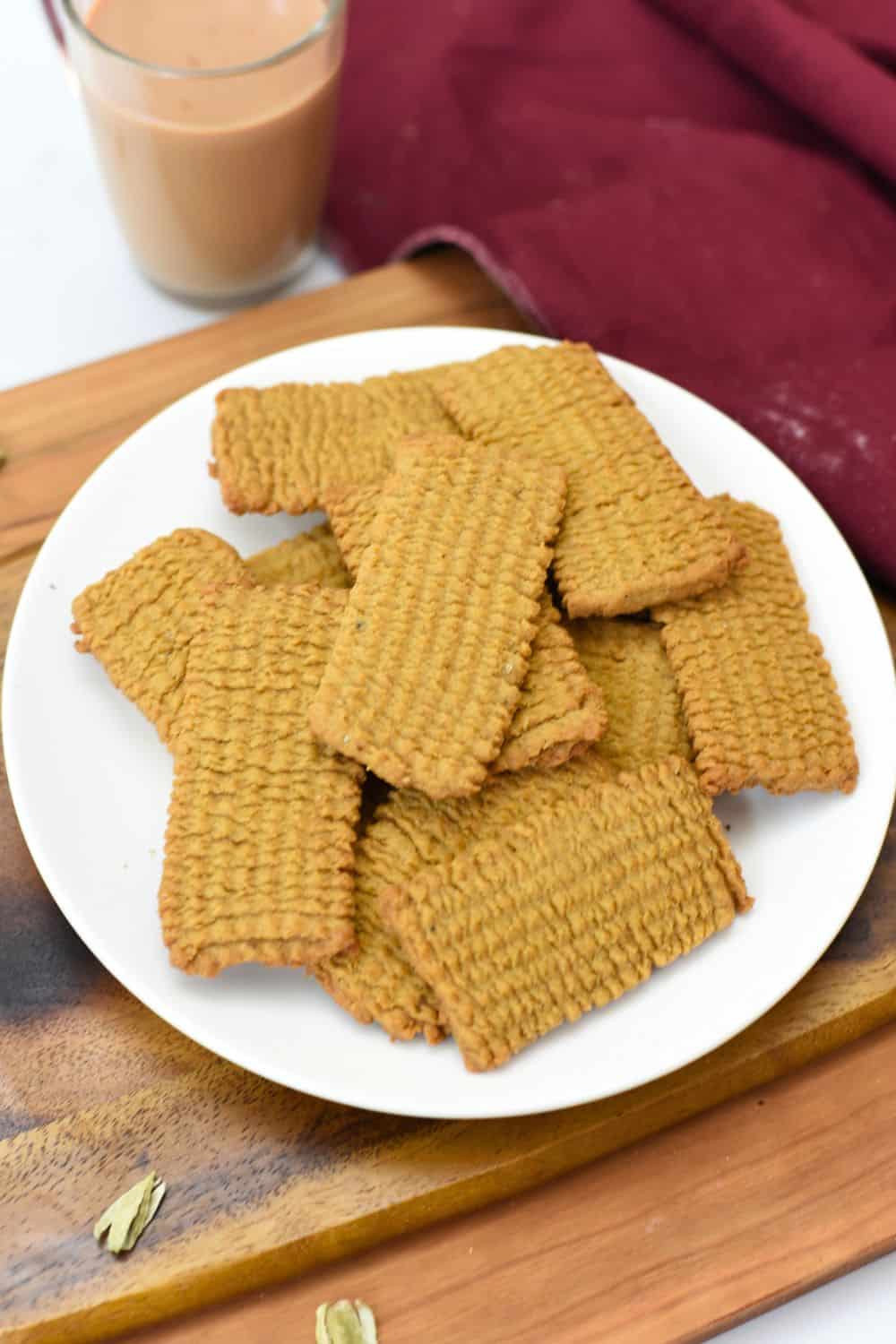
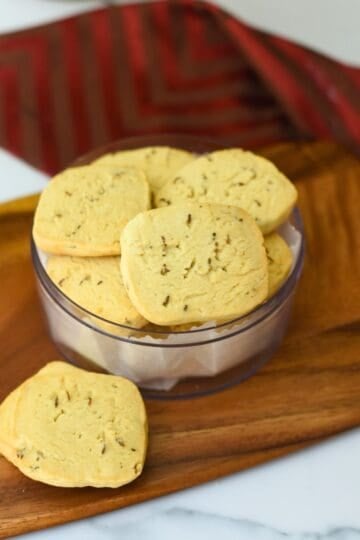
If you grew up in a Punjabi home, you never called them biscuits. They were biscoot. Just the word takes me back to our kitchen table in Mumbai. Chai in a steel katori, sitting with Dada, Dadi, and Papa, a plate of these atta biscoot right beside us. Staple pantry things: atta, ghee, gur, elaichi, and milk. No maida, no white sugar, no refined oil. As they bake, the smell of roasted atta and ghee and gur pulls me straight to Kada Prasad at the gurdwara. Ronav sneaks two before the tray cools. Once you've made a batch at home, the $8.99 store-bought pack at the Indian grocery is going to feel like a joke.
More of our recipes live on Instagram @thebellyrulesthemind.official and Pinterest @Bellyrulesdmind .
Jump to:
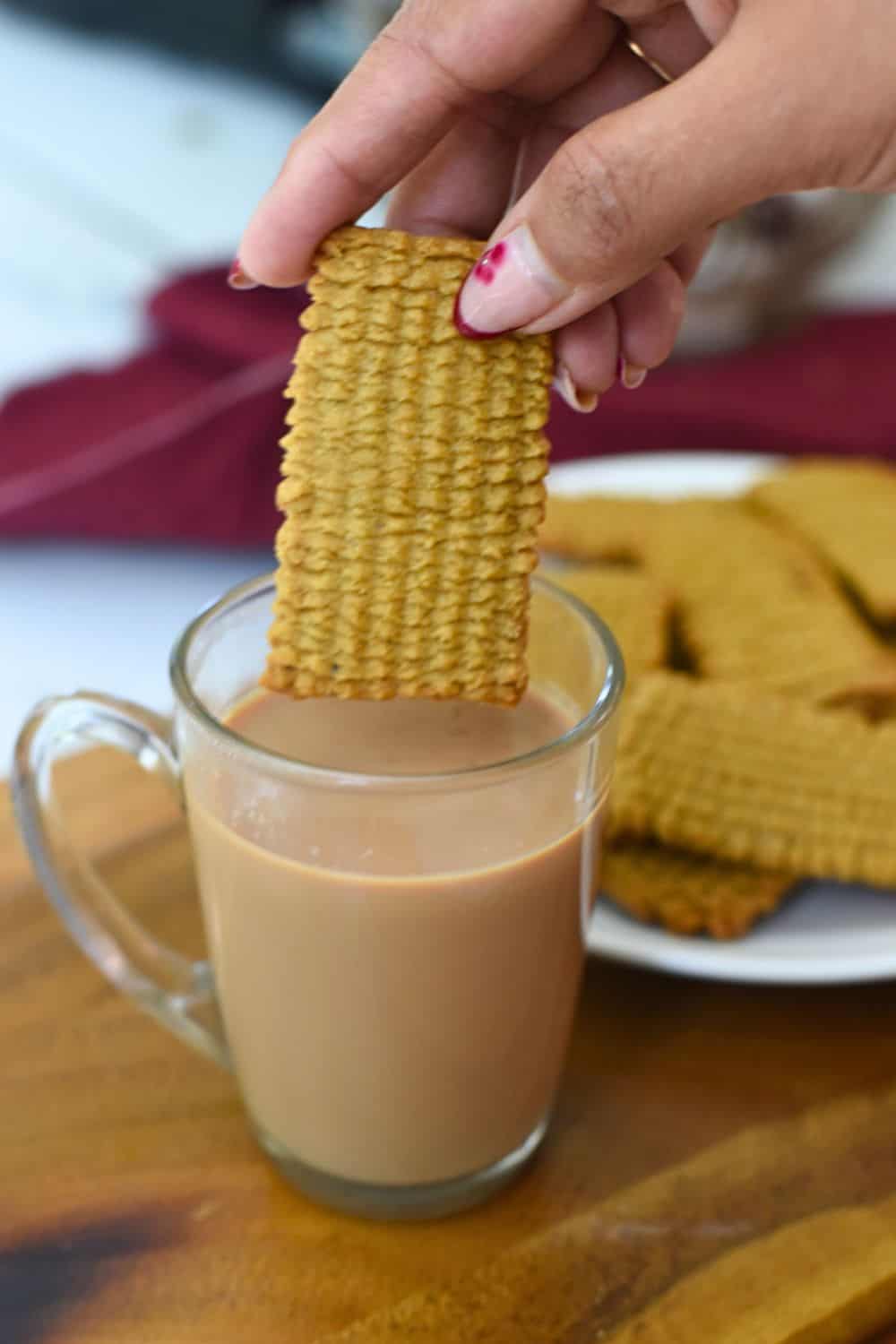
Those atta biscuits lived in big steel containers on top of our fridge. They were supposed to last a few weeks. Somehow they were gone in days, because someone (everyone) kept reaching in for "just one more." Now that I bake them in my own oven, that same smell pulls Rijak and Ronav into the kitchen before the timer even goes off. If you like the bakery-style cookies my family grew up on, you'll love this version. It's the same recipe Mama trusted at the bakery, just sized for a home oven and a Punjabi family that can't leave them alone.
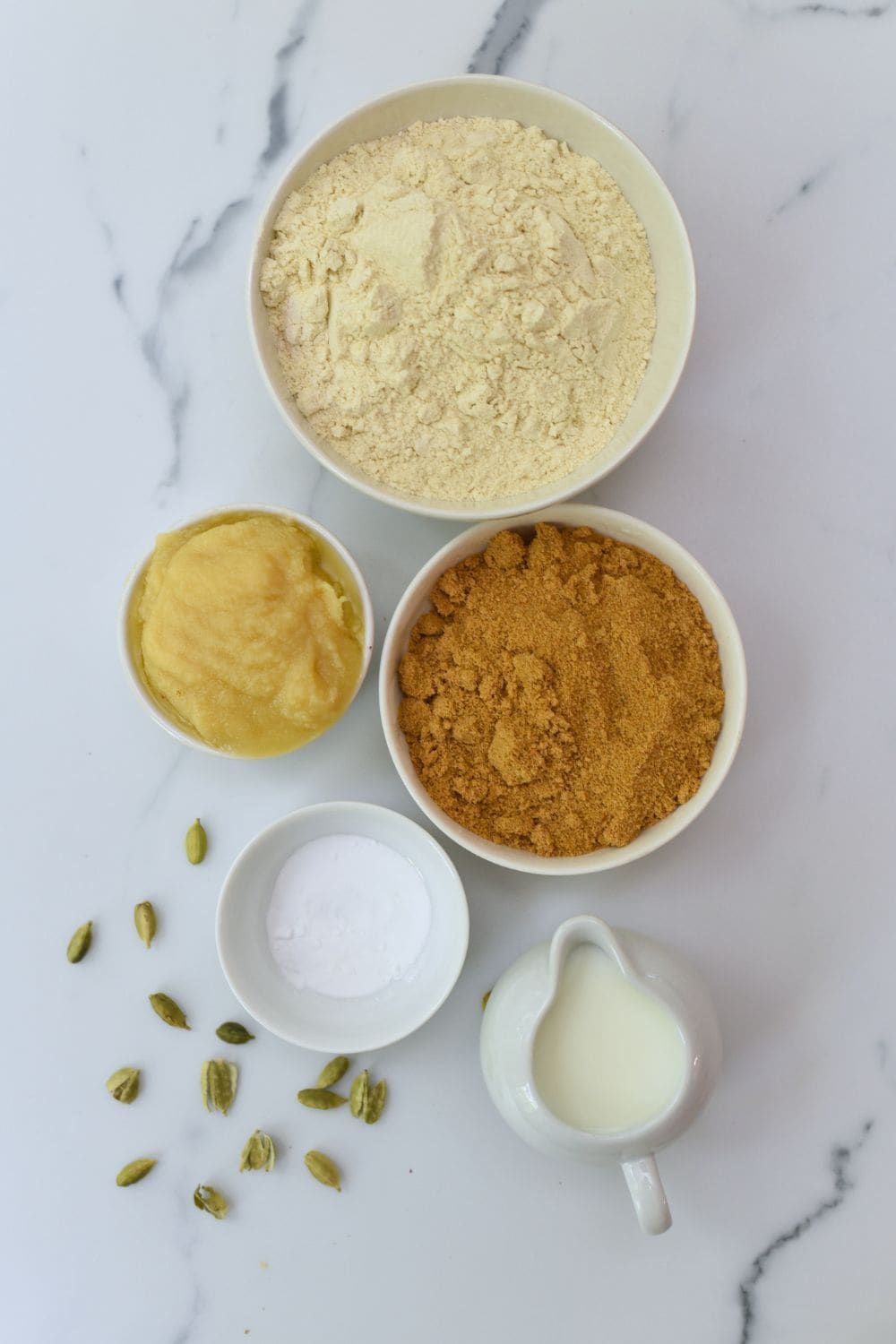
Ingredients for atta biscuits
See the recipe card below for exact quantities. Here's what each ingredient does in the dough.
- Whole wheat flour (atta). The whole grain gives these biscuits their nutty, earthy backbone. Regular maida won't taste right. Use the same atta you'd use for roti.
- Melted ghee. The fat that carries the bakery flavor. It has to be fully melted but not piping hot, or it'll scramble the milk and seize the dough. Aim for warm and pourable.
- Desi khand or grated gur (jaggery). Brings the deeper Punjabi-bakery sweetness. Regular sugar works if that's what you have, but the flavor goes flatter.
- Elaichi powder. The signature note. Freshly crushed green cardamom beats jar powder every time.
- Baking powder and a pinch of baking soda. The combo gives a soft lift without making the biscuit puffy or bready. We're going for short and crisp, not cakey.
- Warm milk. Helps dissolve the khand or gur into a smooth wet mix. Warm, not hot. If it's too hot, the dough goes oily.
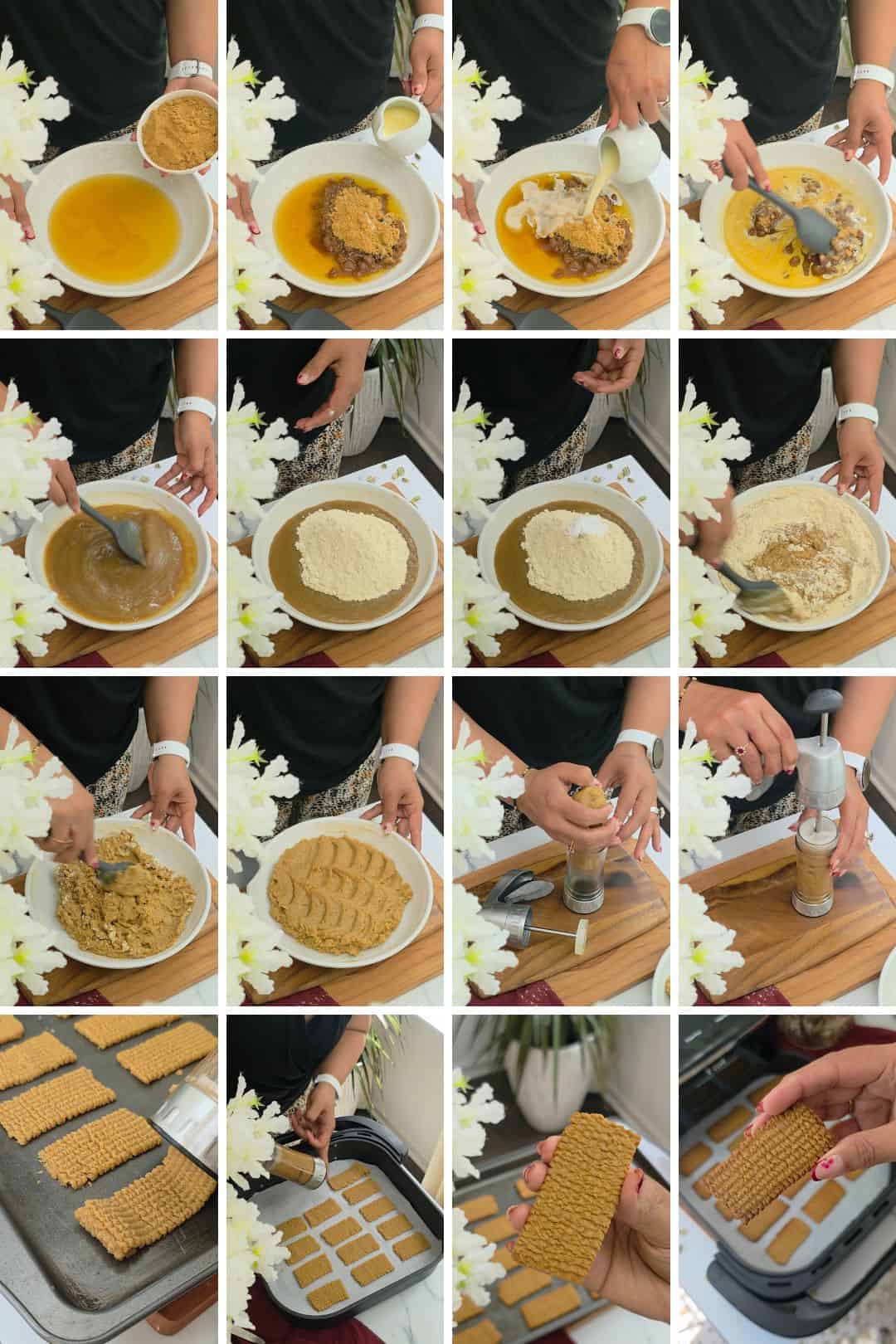
How to make Punjabi atta biscuits
Three steps. Start to finish, you're looking at about thirty minutes including bake time. I use a cookie press to get the ridged bakery shape, but I'll cover the no-press option in the substitutions section.
- Mix the wet ingredients. In a wide bowl, combine the melted ghee, desi khand (or grated gur), and warm milk. Stir until the khand starts to dissolve. It doesn't have to be perfectly smooth, just well combined. You'll still see some grain in the mix, and that's fine. Let it sit for two minutes if the khand is stubborn.
- Add the dry ingredients. Tip in the whole wheat flour, elaichi powder, baking powder, and the pinch of baking soda. Mix gently with a spatula or your hand until the dough just comes together. It will feel softer than a regular cookie dough, almost like a thick paste. Don't panic and don't add more flour. That softness is what lets the press shape the cookie and what gives you the bakery crumble. If you add flour, the biscuits turn hard.
- Shape and bake. Preheat the oven to 350°F (175°C). Load the dough into your cookie press and shape the biscuits directly onto a parchment-lined tray, leaving about 1 inch between each one. I use a Bolton cookie press for the ridged shape, but any standard cookie maker works. Bake for 15 to 18 minutes, until the edges turn golden and the tops look set. Pull the tray and let the biscuits cool fully on it for 10 minutes before lifting. They crisp as they cool, so don't rush this part. You should get around 50 -55 cookies from one batch.
Soniya's Top Tip
The dough is supposed to feel softer than regular cookie dough, almost like a thick paste. If you add more flour to "fix" it, the biscuits come out hard and dense instead of short and crumbly.
Best tips for the perfect atta biscuit
- Melt the ghee, then let it cool a minute. Piping-hot ghee will scramble the milk and make the dough oily instead of soft.
- Grate the gur fine if you're using it. Big chunks won't dissolve in the warm milk and you'll get sweet pockets in some biscuits and none in others.
- Space the cookies 1 inch apart. They spread a little, and crowded biscuits steam each other instead of crisping at the edges.
- Cool on the tray, not on a rack. They're fragile straight out of the oven and only set up firm during that 10-minute rest on the warm tray.
- Pull them at golden edges, not golden tops. Whole wheat scorches faster than maida, and another 2 minutes in the oven turns sweet into bitter.
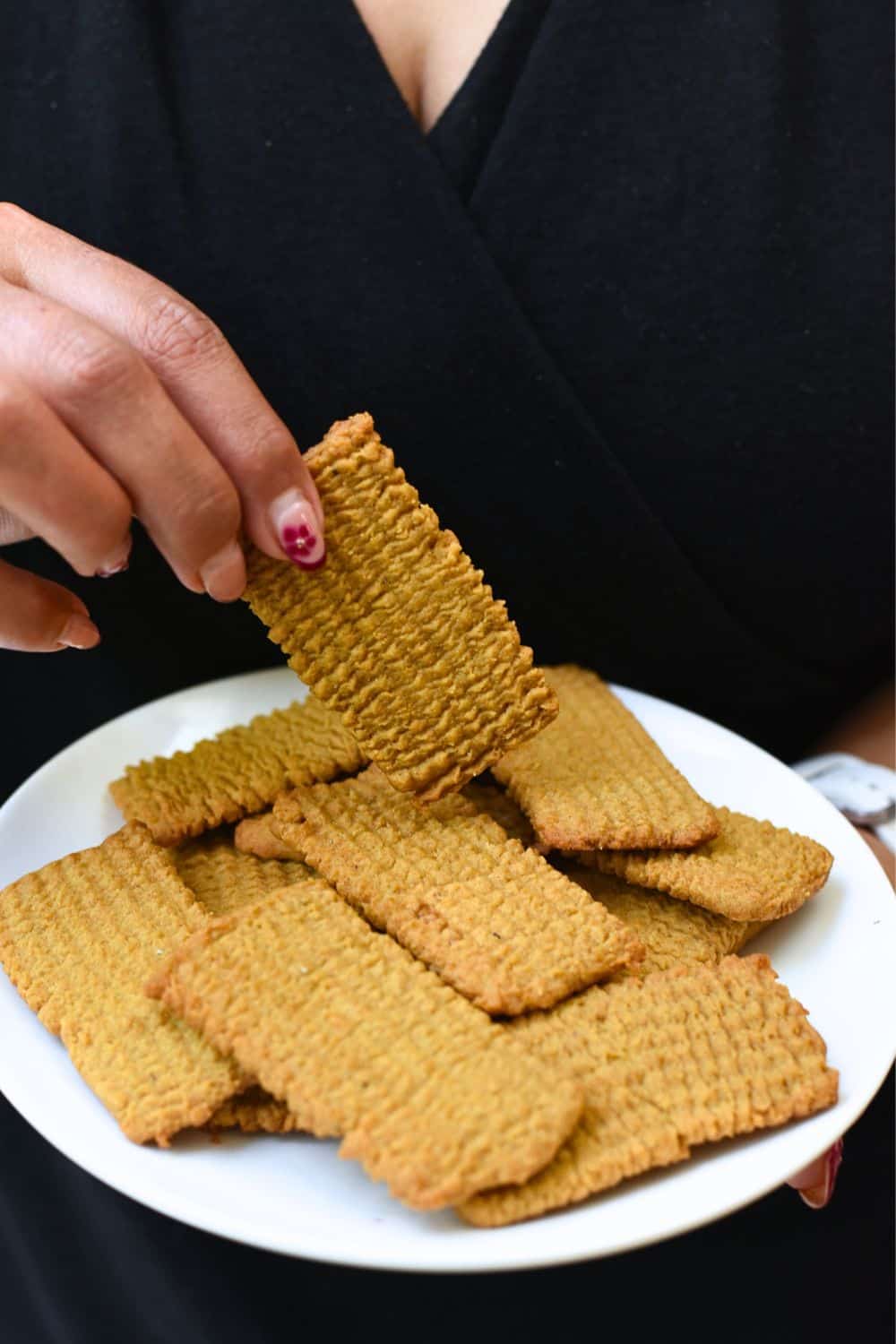
Common mistakes to avoid
| Mistake | What Happens | How I Fix It |
|---|---|---|
| Adding more flour because the dough feels soft | Biscuits come out hard and dense instead of short and crumbly | Trust the soft dough. It's right. The fat-to-flour ratio is what makes the crumble |
| Lifting biscuits straight out of the oven | They break or crumble because they haven't set yet | Cool on the tray for a full 10 minutes. They crisp as they cool |
| Overbaking past golden edges | Whole wheat scorches and the sweet flavor turns bitter | Check at 15 minutes. Pull when edges are golden, even if tops look pale |
Substitutions
- Gur or desi khand swaps. All three work: gur (jaggery), desi khand, and regular white sugar. Gur gives the deepest flavor, khand sits in the middle, sugar is the lightest. If you use regular sugar, you'll lose some of the bakery character but the texture stays the same.
- Ghee to butter. Melted unsalted butter works, but you'll lose the nutty ghee flavor that's the soul of this biscuit. If you're out of ghee, butter is fine. If you have ghee, use ghee.
- Dairy milk to plant milk. Warm oat milk or warm full-fat soy milk both work. Almond milk is too thin and the dough comes out drier.
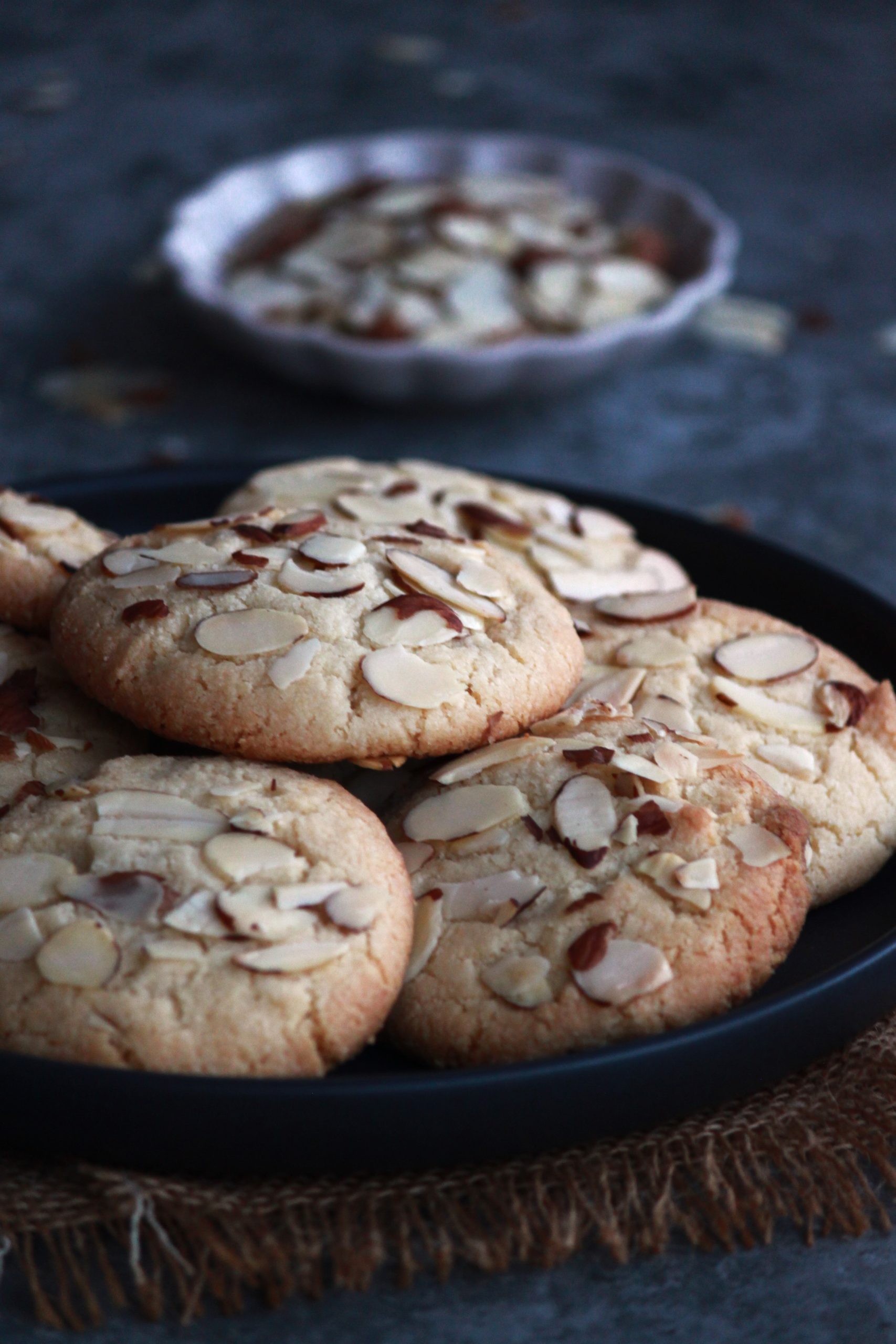
- No cookie press? Roll the dough into small balls (about a tablespoon each), place them on the tray, and press down gently with the back of a fork to make ridges. Same bake time, same temperature. For another eggless cookie that uses this hand-shaped method, try our eggless marzipan cookies.
Storage
| Can It Be Saved? | How Long? | How to Store |
|---|---|---|
| Room temperature (steel container) | Up to 2 weeks | Cool fully, layer with parchment, seal in an airtight steel or glass container away from light |
| Refrigerator | Up to 1 month | Airtight container. Bring to room temp before serving so the ghee softens back up |
| Freezer | Up to 3 months | Freeze in a zip bag with parchment between layers. Thaw on the counter for 30 minutes before eating |
How to serve atta biscuits
The classic way is with hot masala chai. The biscuit is just sweet enough that it doesn't fight the spices in the chai, and the ghee softens a touch when you dunk it. We also pile them on the Diwali platter every year alongside burfi and chakli. For an evening snack, two biscuits with a cup of coffee is what I reach for. Rijak takes a stack with him when he heads back to school. Ronav eats them straight out of the steel container and pretends he didn't.
Serve with
- Homemade masala chai for the classic biscuit-and-chai pairing the bakery version was always served with.
More Indian baking recipes you'll love
If atta biscuits are your new weekend baking project, here are a few more eggless, Indian-pantry recipes from our kitchen that fit the same mood.


Punjabi Atta Biscuits

Servings:
biscuitsCalories:
Ingredients
- 2 cups whole wheat flour (atta)
- 1 cup melted ghee warm and pourable, not piping hot
- 1 cup desi khand or grated gur (jaggery) regular sugar also works; gur gives the deepest Punjabi-bakery flavor
- 1 teaspoon elaichi (cardamom) powder freshly crushed green pods if possible
- ½ teaspoon baking powder
- 1 pinch baking soda
- ½ cup warm milk warm, not hot
Instructions
- Mix the wet ingredients. In a wide bowl, combine the melted ghee, desi khand (or grated gur), and warm milk. Stir until the khand starts to dissolve. It doesn't have to be perfectly smooth, just well combined. Let it sit for two minutes if the khand is stubborn.
- Add the dry ingredients. Tip in the whole wheat flour, elaichi powder, baking powder, and the pinch of baking soda. Mix gently with a spatula or your hand until the dough just comes together. The dough will feel softer than a regular cookie dough, almost like a thick paste. Don't add more flour. That softness is what gives the bakery crumble.
- Preheat the oven to 350°F (175°C). Load the dough into a cookie press and shape biscuits directly onto a parchment-lined tray, leaving about 1 inch between each one. A Bolton cookie press or any similar cookie maker works.
- Bake for 15 to 18 minutes, until the edges turn golden and the tops look set. Check at 15 minutes since whole wheat scorches faster than maida.
- Pull the tray and let the biscuits cool fully on it for 10 minutes before lifting. They crisp as they cool, so don't rush this part. You should get around 60 to 65 small biscuits from one batch.
Video
Notes
- Melt the ghee, then let it cool a minute. Piping-hot ghee will scramble the milk and make the dough oily instead of soft.
- Grate the gur fine if you're using it. Big chunks won't dissolve in the warm milk and you'll get sweet pockets in some biscuits and none in others.
- Space the cookies 1 inch apart. They spread a little, and crowded biscuits steam each other instead of crisping at the edges.
- Cool on the tray, not on a rack. They're fragile straight out of the oven and only set up firm during that 10-minute rest on the warm tray.
- Pull them at golden edges, not golden tops. Whole wheat scorches faster than maida, and another 2 minutes in the oven turns sweet into bitter.


Leave a Reply