
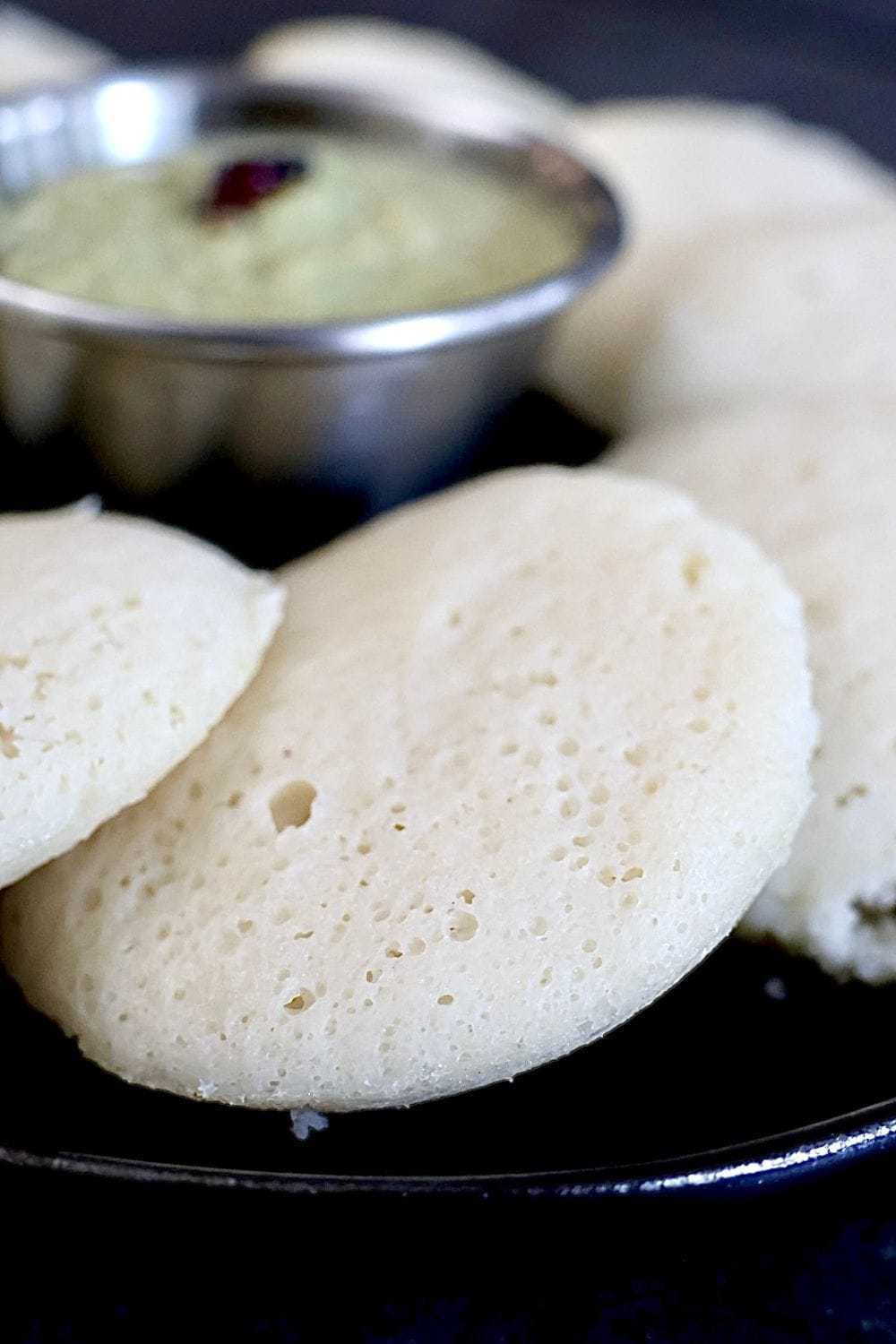
Want soft and spongy idlis without using the special idli rice and don't have a wet grinder? This step-by-step no-soda, no-rice, idli recipe is all about proportions, soaking, grinding, fermenting the batter correctly and steaming to get those fluffy, cloud like idlis using idli rava. You can use this batter not just for idlis, but for uttapams & appe too.
Come JOIN US on Instagram @thebellyrulesthemind.official and Pinterest @Bellyrulesdmind and be a part of our community and discuss various recipes, tips and tricks.
Jump to:
- Why make Idli with Idli Rava
- Ingredients to make soft Idlis
- How to make Idli Batter using Idli Rava
- How to know the batter is ready for Idlis
- How to make soft & spongy Idlis with Idli Rava Batter
- Anvita's Top Tip
- Common Mistakes to Avoid When Making Idlis Using Idli Rava Batter
- How to serve
- Pairings
- Soft & Spongy Idlis using Idli Rava
I thought my idlis were good. Then one day, my friend's mom made idlis that were even better. They were so soft, spongy, and fluffy that they melted in my mouth. her secret to soft spongy idlis was using idli rava and that too without any soda and wet grinder. I was sold. So I asked her to teach me her recipe, tips and tricks, which I am sharing below.
Why make Idli with Idli Rava
Truth be told, like many of you I don't have a wet grinder and neither do I always have idli rice handy at home. That's when idli rava comes handy.
- Traditional idli uses whole rice that needs to be ground for a longer time. Wet grinders are best for grinding this whole rice.
- Idli rava skips this long grinding step because it is already made from parboiled rice ground to the right texture.
- Idli rava batter is also more forgiving & ferments more easily and consistently
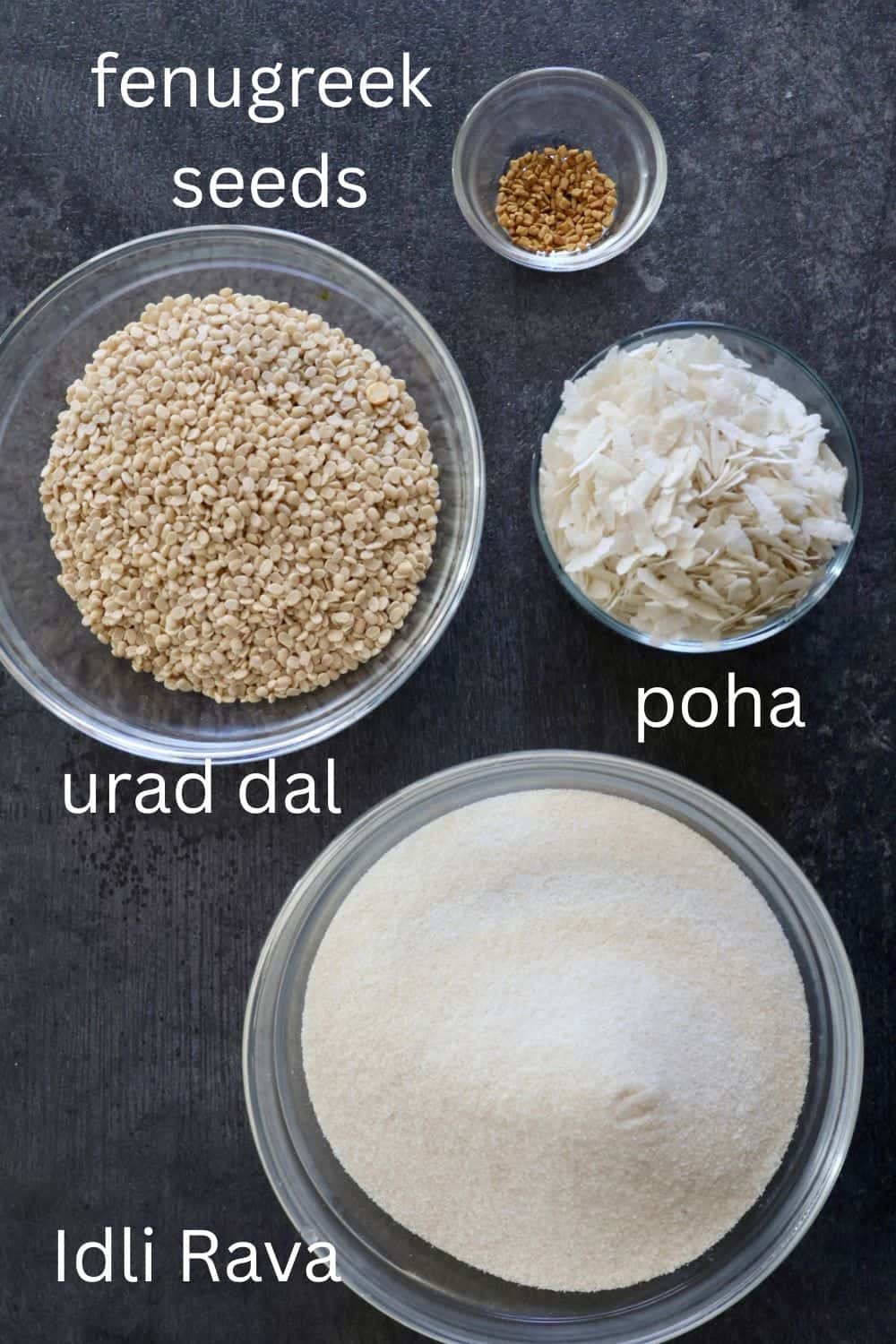
Ingredients to make soft Idlis
This is just a gist of the ingredients. For batter prep and ratio details, see idli batter recipe.
- Idli rava - for the traditional base without grinding.
- Urad dal - is the backbone for fermentation, softness and lift.
- Fenugreek (methi) seeds - just a tiny amount enables better fermentation for the batter to stay soft.
- Poha or cooked rice - help in better fermentation of the batter, to ger more rise and air bubbles in the idli. The starch in it also gives the idlis a cloud like texture. Lastly they also help in grinding in a ixer instead of a wet grinder, improving softness which you would otherwise lose.
- Salt - ofcourse needs to be added at the right stage so that it doesn't slow down the fermentation.
If you'd like the full batter process, from soaking to fermenting, check out my detailed idli batter using idli rava post for step‑by‑step prep before you get to the steaming stage.
How to make Idli Batter using Idli Rava
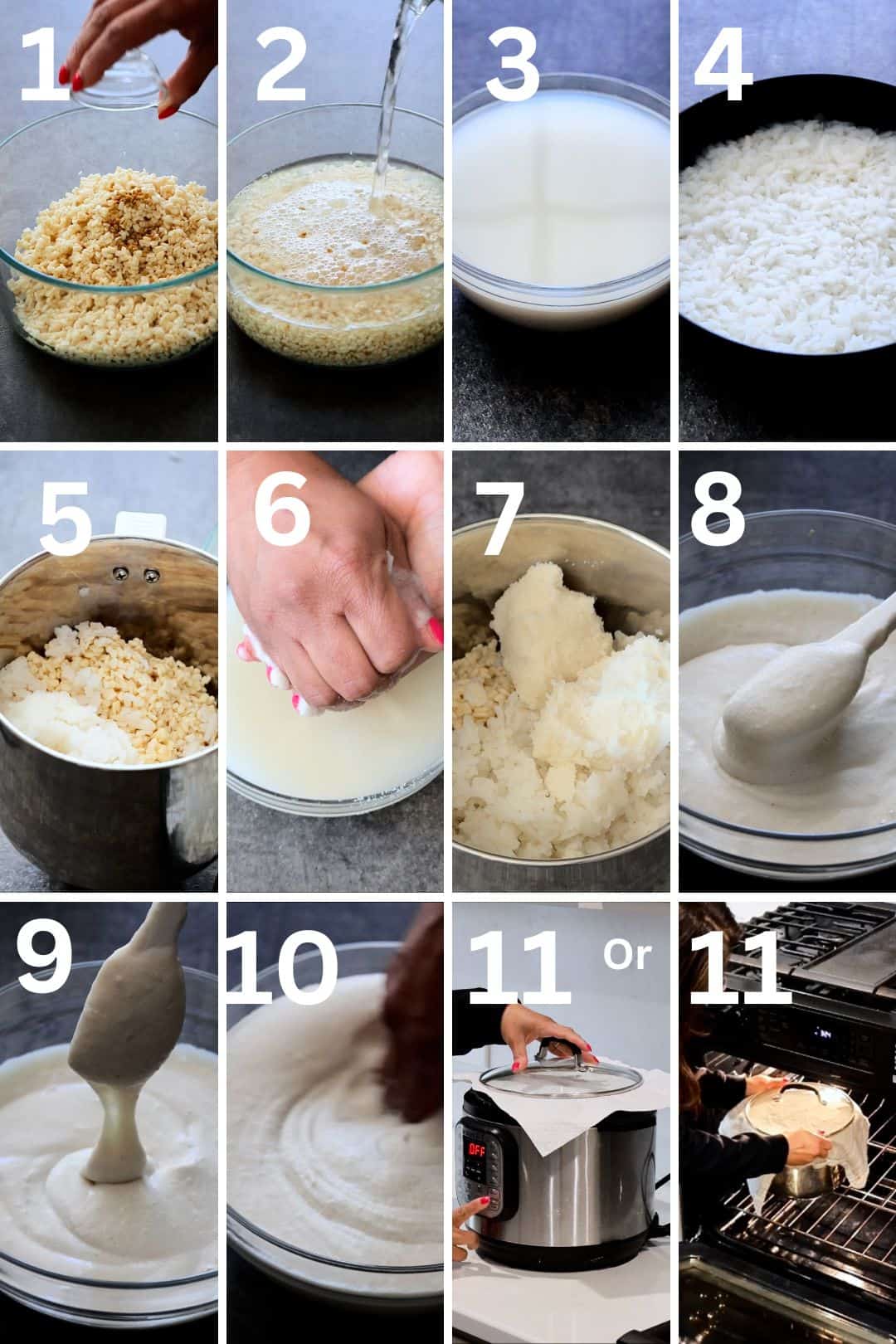
- Soak urad dal & methi in one bowl and idli rava in another for atleast 5 hours. 20 minutes before grinding soak poha if not using cooked rice.
- Grind drained urad dal, poha and squeezed idli rava in batches with cold water (add gradually) until light and smooth.
- If the mixer heats up, pause or add a couple of ice cubes.
- Mix dal batter, rava, & whisk with your hand in circular motion for 5 minutes and into a thick, pourable batter.
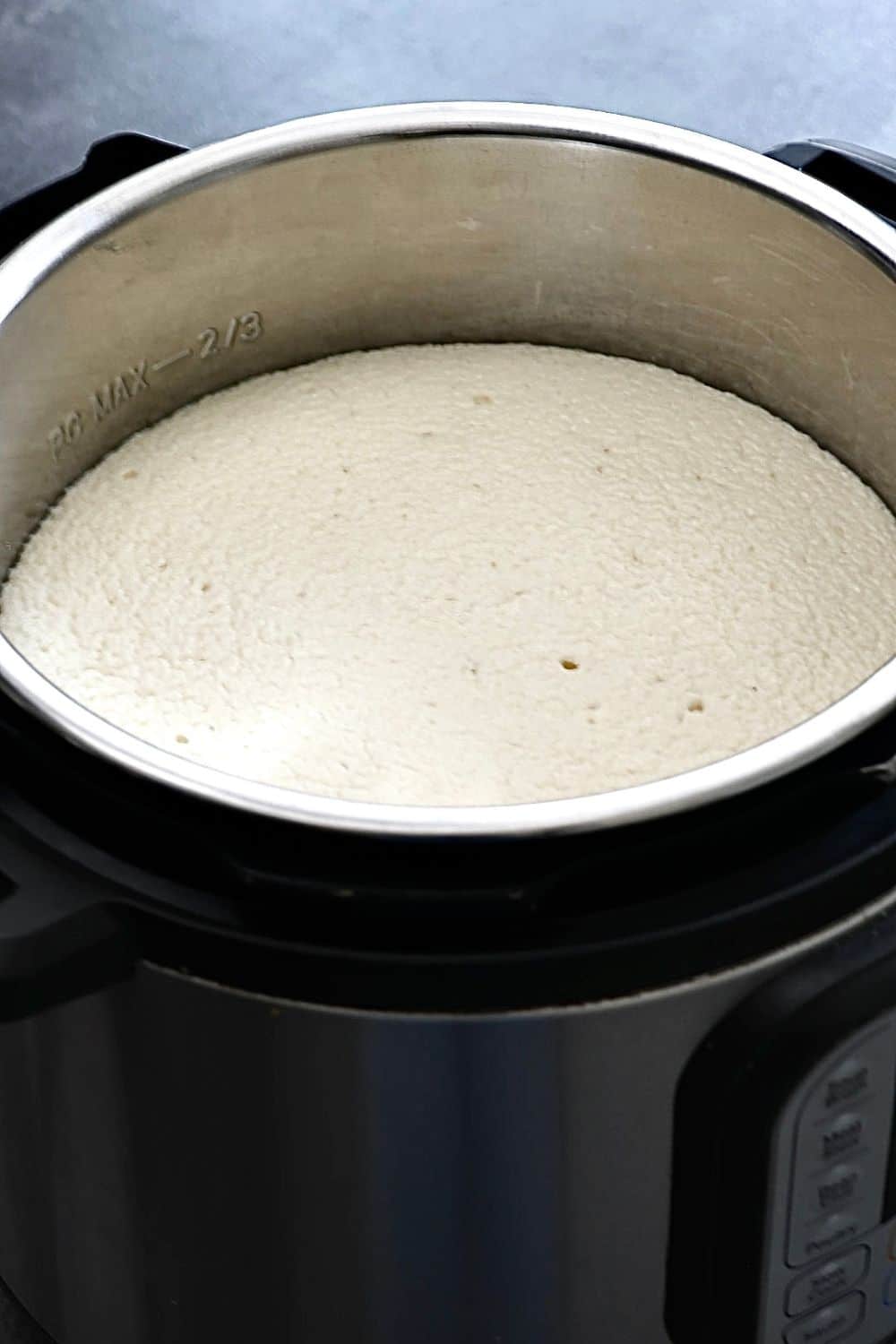
- Ferment the batter. You could either use an Instant Pot and ferment it on yogurt mode for 8- 12 hours. Or cover the container with a lid and ferment it in the oven with the light on. If your oven has a bread proof setting like mine, use that setting to ferment your batter at 95 F overnight.
How to know the batter is ready for Idlis
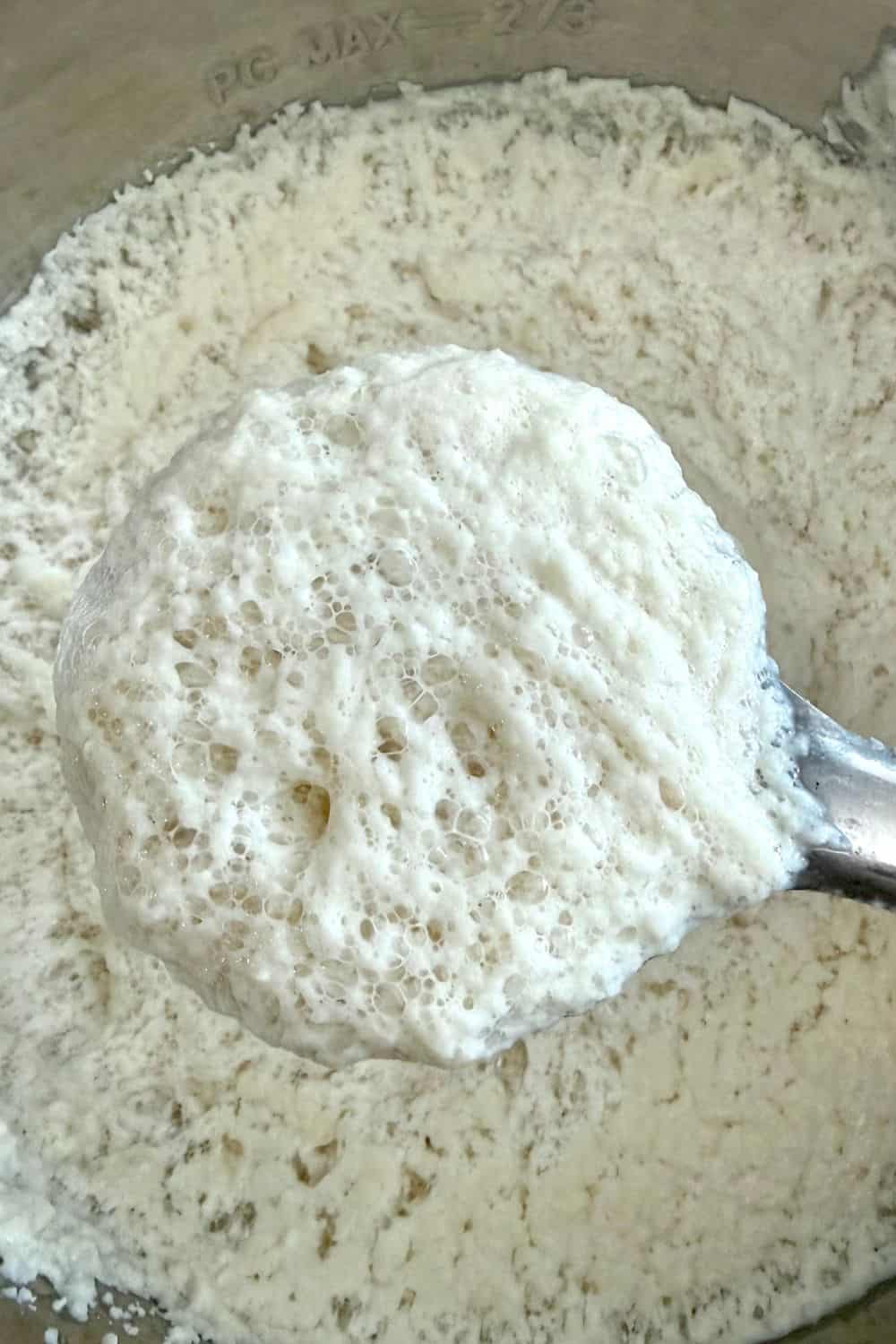
- Proper rise - You should see a clear rise in volume or a light dome on the top.
- Aerated texture - When you spoon through the batter you will see small air bubbles and the batter will feel light instead of heavy and pasty.
- Smell test - Look for a mildly sour aroma just enough for the right fermentation. If the batter smells fishy it's over fermented.
How to make soft & spongy Idlis with Idli Rava Batter
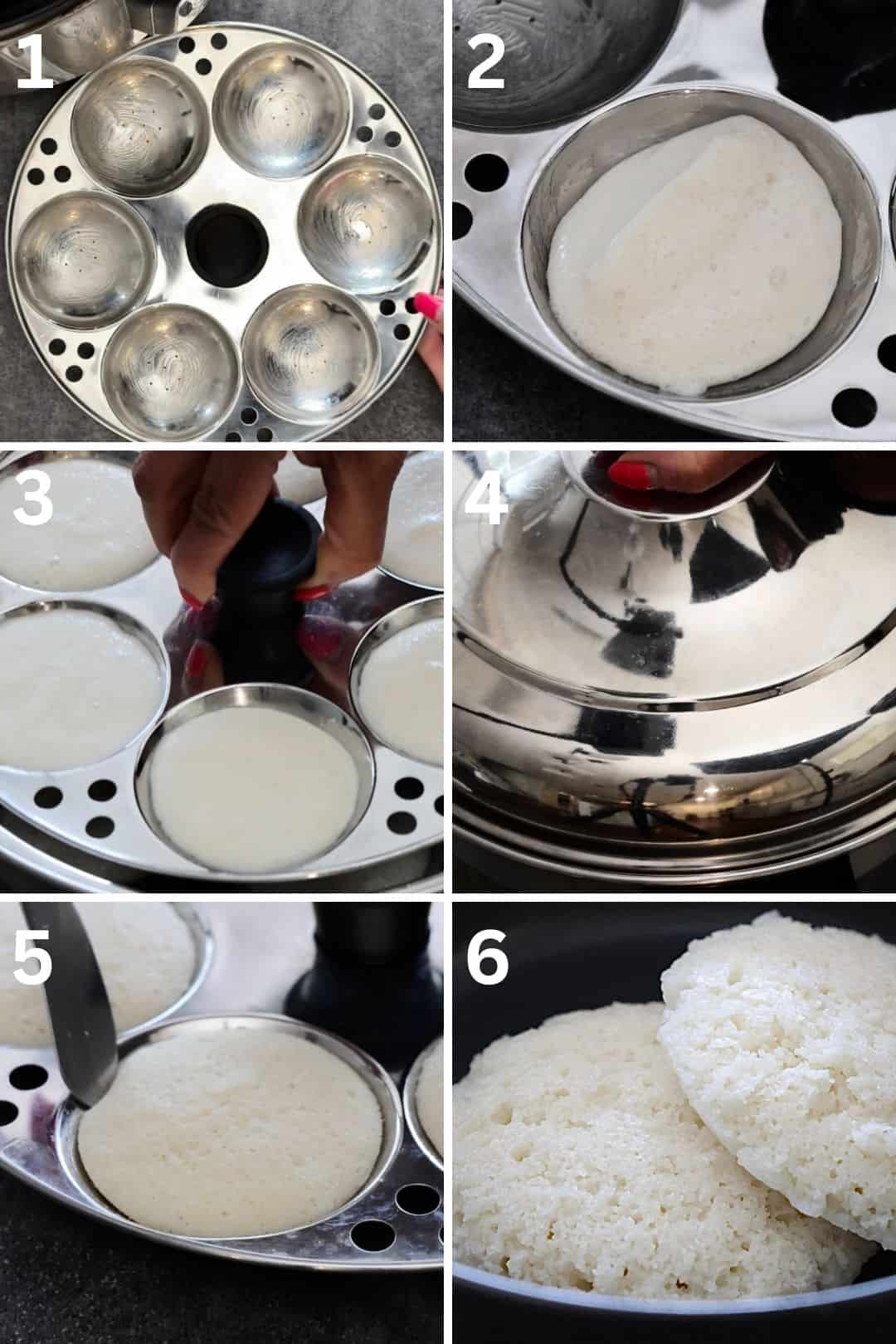
- Prep the steamer - add water in your idli steamer or pot such that you make sure it's not touching the idli plates, and get the water to start steaming.
- Check and stir the batter - gentle stir the fermented batter without knockiing out the air bubbles to ensure soft idlis
- Grease the moulds - using a brush grease the moulds with oil or ghee.
- Fill the molds - Fill ¾th of each mold with batter, leaving room for the idli to rise and puff up.
- Steam - Steam for 15 minutes on medium heat and then insert a knife or toothpick in the canter to make sure it comes clean. If you live on higher altitudes you might need more time.
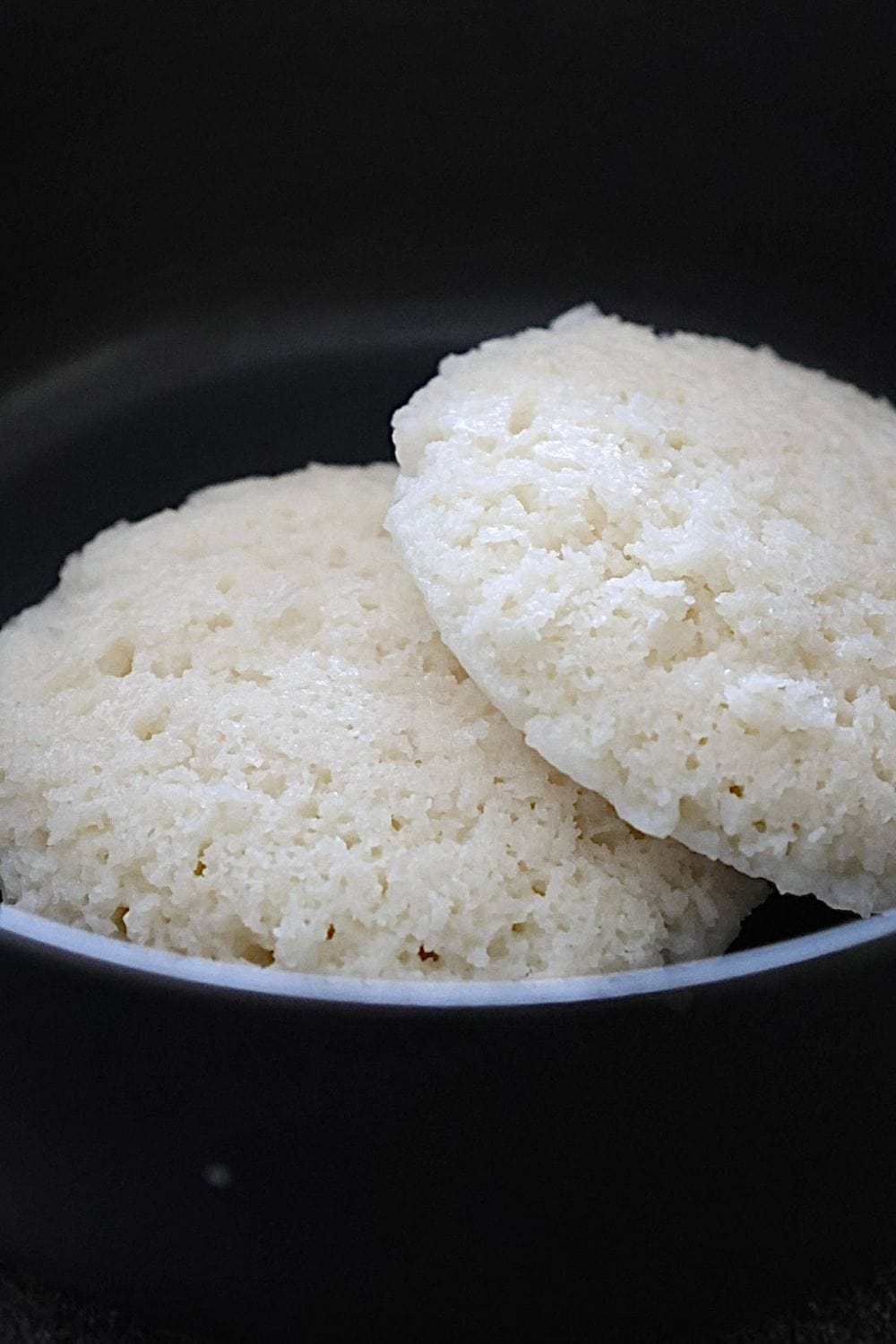
- Rest - remove the plates rom the steamer and allow the idli to rest for a couple minutes before you start scooping them out with a greased spoon or knife.
Anvita's Top Tip
- Get the batter consistency right. Idli rava batter should be thick yet airy, not pourable like dosa batter and not stiff like dough. If it's too thick, it won't ferment well. If it's too thin, your idlis will turn flat. The batter should fall off the spoon slowly and hold its shape for a second before settling.
- Fermentation is about warmth, not time. Fermentation doesn't follow the clock it follows temperature. In cooler kitchens, idli rava batter needs a consistently warm spot to rise properly. Use an oven with the light on or an Instant Pot (yogurt mode) and look for a gentle rise and airy texture, not a strong sour smell.
- Handle fermented batter gently & steam with care. Once fermented, the batter is full of air, rough stirring or aggressive steaming will knock that air out. Gently fold the batter once or twice, fill molds only ¾ full, and steam on medium heat until just cooked.
Common Mistakes to Avoid When Making Idlis Using Idli Rava Batter
If you want soft idlis, it's not just the perfect steaming but also the right batter stage.if any of these are missing, the idlis can turn out dense even if you steam them correctly.
| Mistake to Avoid | Why It Happens | Result | How to Fix It |
|---|---|---|---|
| Batter too thick | Not enough water during grinding or after mixing rava | Poor fermentation, dense idlis | Add water gradually until batter falls slowly from a spoon |
| Batter too thin | Excess water while grinding | Flat, spreading idlis | Mix in 1–2 tablespoon idli rava, rest 15 minutes, then adjust |
| Idli rava not drained well | Retained soaking water | Watery batter | Gently squeeze rava before mixing |
| Batter heats up while grinding | Overloading mixer, long grinding | Weak fermentation | Grind in short bursts using cold water |
| Batter doesn’t ferment | Cold kitchen or old urad dal | Hard, flat idlis | Ferment in oven/Instant Pot; use fresh urad dal |
| Batter over-ferments | Left too long in warm spot | Sour smell, collapsing idlis | Stir gently, use immediately or repurpose as uttapam |
| Salt added before fermentation (cold climates) | Salt slows yeast activity | Delayed or weak rise | Add salt after fermentation if kitchen is cold |
| Rough handling of fermented batter | Vigorous stirring | Loss of air | Gently fold batter once or twice before pouring |
| Overfilling idli molds | Batter expands while steaming | Misshapen, dense idlis | Fill molds only ¾ full |
| Steaming on very high heat | Excess steam pressure | Hard outer layer | Steam on medium heat |
| Opening lid too early | Steam escapes mid-cook | Idlis sink or turn gummy | Wait full steaming time before opening |
| Over-steaming idlis | Fear of undercooking | Dry, rubbery idlis | Steam only until a toothpick comes out clean |
| Not greasing molds | Skipping oil | Idlis stick and break | Lightly grease molds every time |
| Letting idlis sit too long in molds | Condensation forms | Wet base | Remove idlis within 2–3 minutes |
How to serve
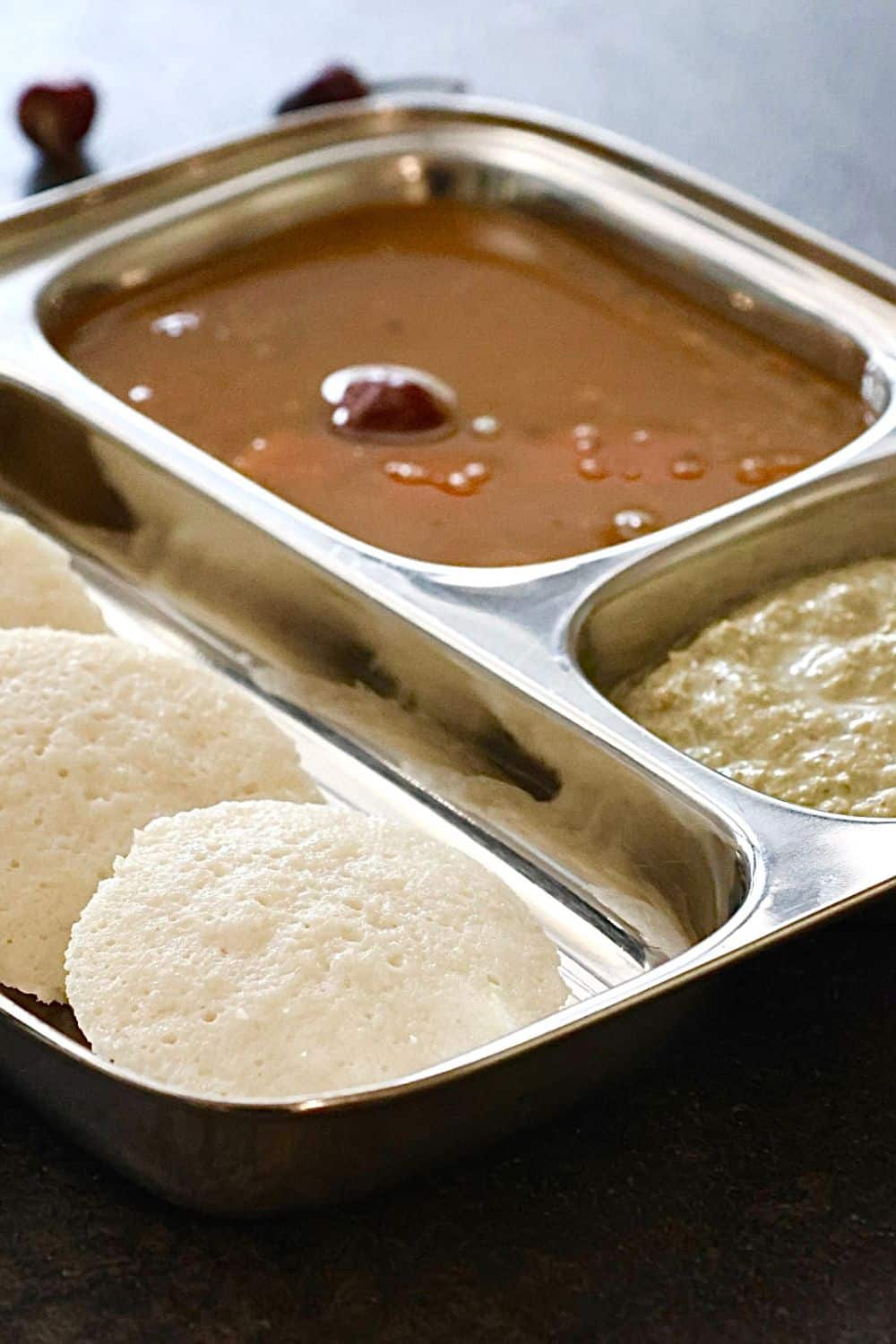
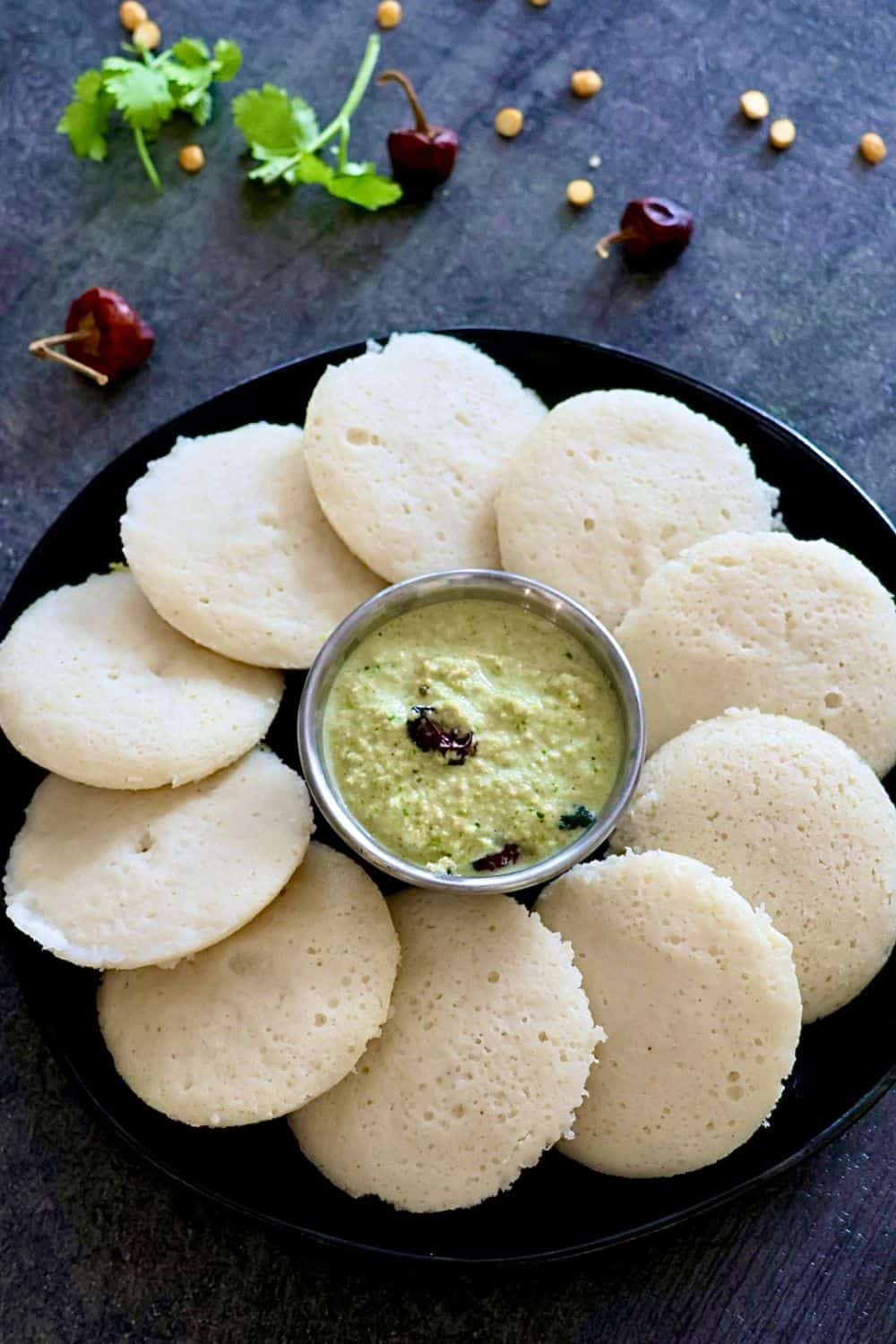
Pair the idlis with Anna style coconut chutney, or sambar or even peanut chutney.
Final Thoughts
Using idli rava to make idlis has never let me down, and I hope it becomes just as reliable in your kitchen. If you try it, please come back let us know how they worked for you. Your tweaks, your wins, even your questions and share your experience or leave a rating.
Pairings
These are my favorite dishes to serve with Idlis
Soft & Spongy Idlis using Idli Rava

Servings:
Calories:
Ingredients
For exact quantities, refer to the idli batter recipe
- 1 cup urad dal
- 2 cups idli rava
- 1 teaspoon fenugreek seeds methi dana
- 1 cup poha or left over cooked rice
- ½ tablespoon salt
- 1 cup water
Instructions
To make Idli Batter
- Soak urad dal & methi in one bowl and idli rava in another for atleast 5 hours. 20 minutes before grinding soak poha if not using cooked rice.
- Grind drained urad dal with soaked poha and squeezed idla rava in batches with cold water (add gradually) until light and smooth.
- If the mixer heats up, pause or add a couple of ice cubes.
- Mix dal batter, rava, and salt & whisk with your hand in circular motion for 5 minutes and into a thick, pourable batter.
- Ferment the batter. You could either use an Instant Pot and ferment it on yogurt mode for 8- 12 hours. Or cover the container with a lid and ferment it in the oven with the light on. If your oven has a bread proof setting like mine, use that setting to ferment your batter at 95 F overnight.
To steam idli
- For idli batter recipe click here
- Prep the steamer - add water in your idli steamer or pot such that you make sure it's not touching the idli plates, and get the water to start steaming.
- Check and stir the batter - gentle stir the fermented batter without knocking out the air bubbles to ensure soft idlis
- Grease the moulds - using a brush grease the moulds with oil or ghee.
- Fill the molds - Fill ¾th of each mold with batter, leaving room for the idli to rise and puff up.
- Steam - Steam for 15 minutes on medium heat and then insert a knife or toothpick in the canter to make sure it comes clean. If you live on higher altitudes you might need more time.
- Rest - remove the plates rom the steamer and allow the idli to rest for a couple minutes before you start scooping them out with a greased spoon or knife.

Leave a Reply