
Karah Prashad isn't just a recipe to me. It's memory, discipline, humility, and devotion, all served warm, in cupped hands. It's every single Sunday morning of my childhood. I can still picture myself standing in the Gurdwara during Ardaas with my eyes closed and hands folded, but honestly, I was mostly thinking about what was coming next. That moment when the Sewadar would walk by with the bowl and gently place that warm, soft Parshad into my cupped hands. I'd touch it to my forehead first like my mom taught me, close my eyes for a second, then eat it slowly trying to make it last. And yes, I absolutely tried to get back in line for seconds every single time. Subtly. Or so I thought. My mom always caught me.
Come JOIN US on Instagram @thebellyrulesthemind.official and Pinterest @Bellyrulesdmind and be a part of our community and discuss various recipes, tips and tricks.
Jump to:
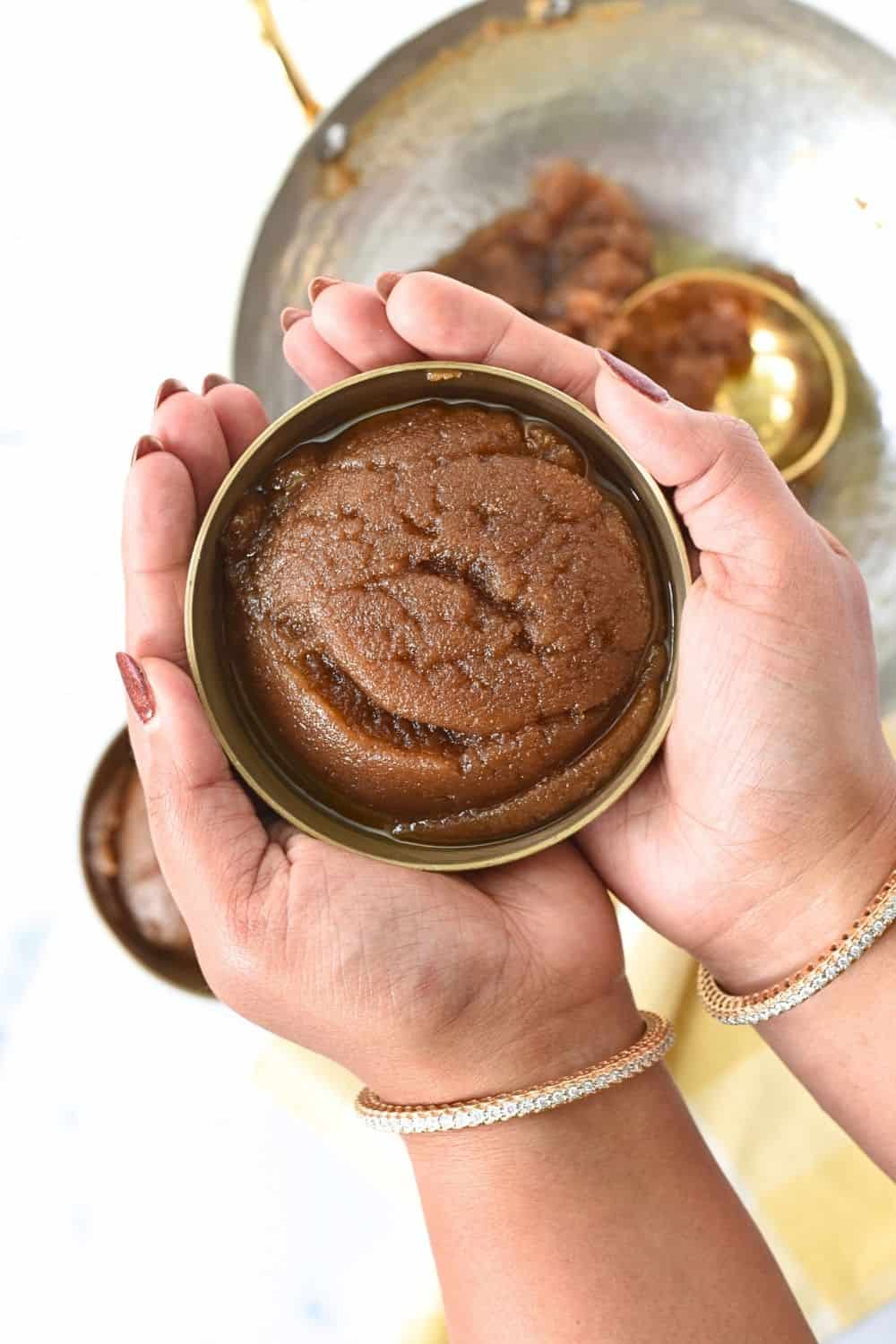
There's a specific way you receive Karah Prashad that I learned before I could even tie my own shoes. You don't grab it or reach for it. You sit, you cup both hands together, and you wait. That simple act taught me more about patience and humility than any lesson my parents tried to drill into me. At home, my mom made it for every Gurpurab, every Sangrand, every birthday. I'd sit on the kitchen floor watching her measure everything with such precision. Equal parts ghee, atta, and sugar. "Bas barabar matra, Soniya," she'd say. Perfect proportion. No adding extra sugar because we liked it sweeter. No cutting back on ghee to make it lighter. The recipe doesn't bend.
She told me something I never forgot. If you rush Karah Prashad, everyone who eats it will know. The flour won't develop that deep nutty smell, the texture will be off, and the whole thing just won't taste right. Making this taught me that some things in life simply cannot be hurried. You stir, you wait, you trust the process. And when it's done right, what you get is simple, warm, and meant to be shared with gratitude.
Ingredients
See recipe card for quantities.
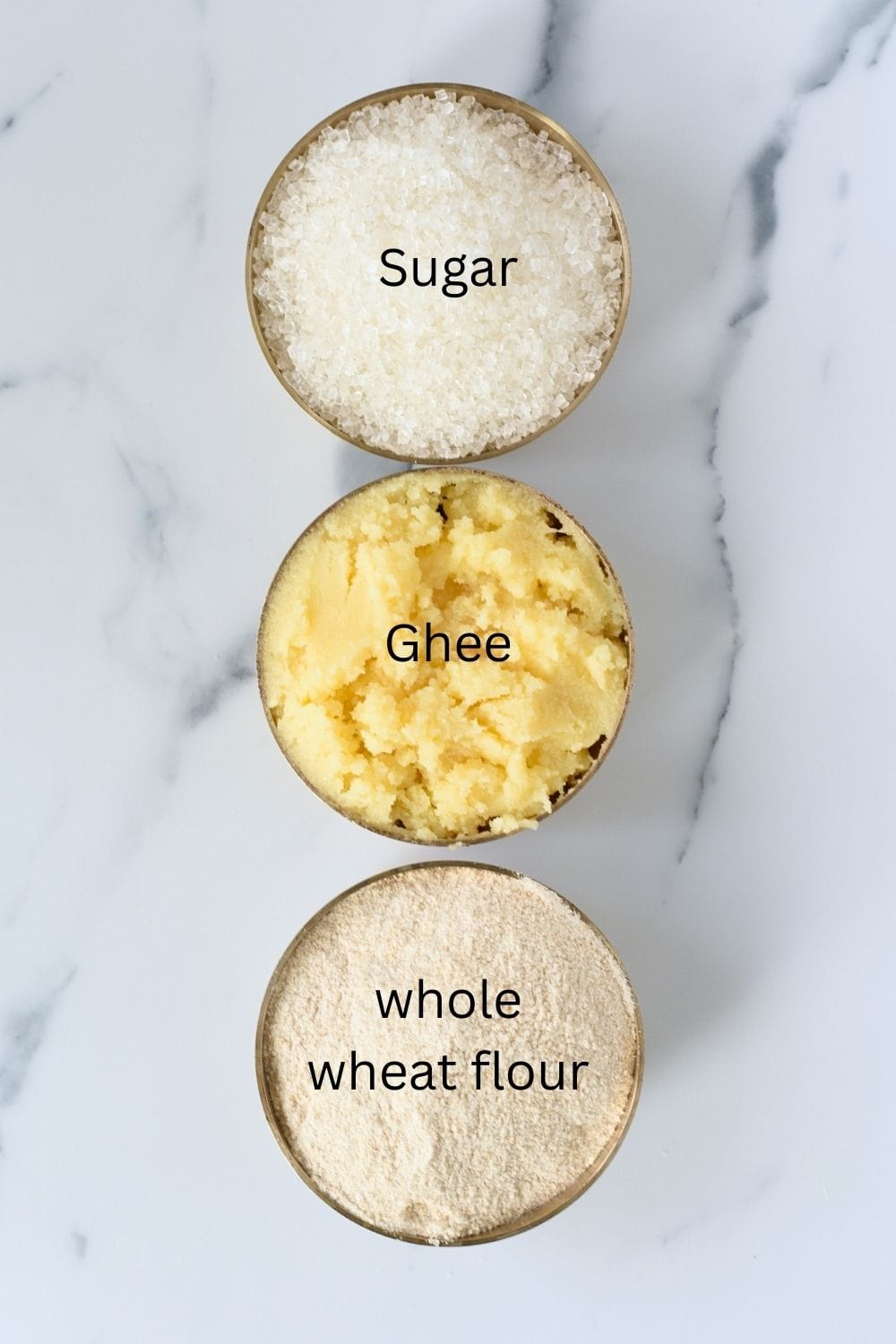
- Coarse whole wheat flour (atta): The foundation of this recipe. Coarse atta gives the best texture, but regular whole wheat flour works perfectly too. The slow roasting of wheat flour is what creates that deep, nutty flavor.
- Ghee: This is what carries all the flavors and gives Karah Prashad its signature glossy, smooth texture. Don't skimp on quality here. You can use homemade Ghee or store bought. Good ghee makes a noticeable difference.
- Sugar: Balances the nuttiness of the roasted flour. The sugar dissolves into the mixture and helps bind everything together while adding sweetness.
- Water: Brings the mixture together and helps create that soft, halwa like consistency. The vigorous bubbling when you add water is completely normal.
Instructions
- Melt the ghee
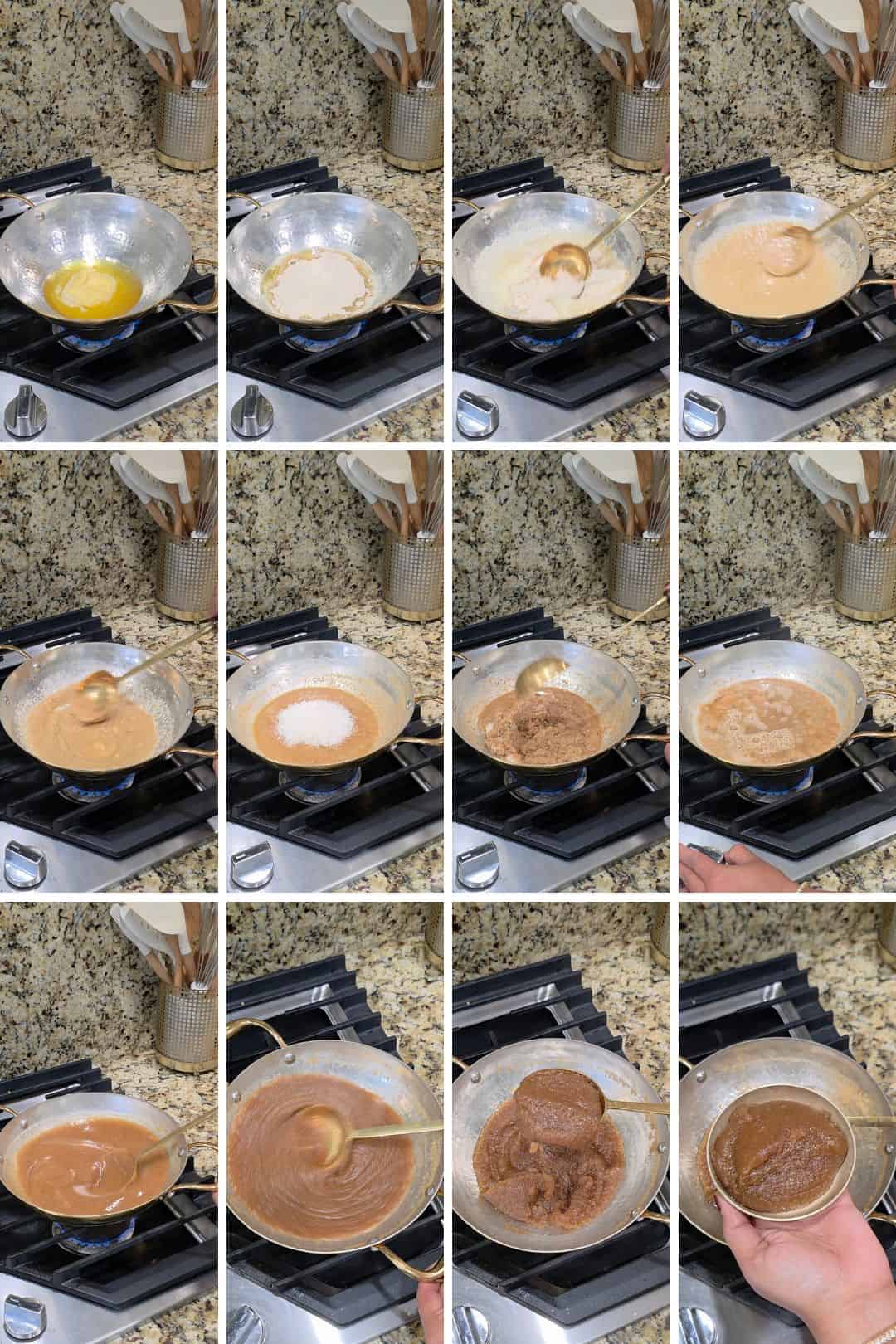
- Place a thick-bottomed pan or kadai on medium heat and add all the ghee. Let it melt completely until it's shimmering but not smoking. This step is quick, usually a minute or two. The ghee needs to be fully liquid so the flour can absorb it evenly.
- Add flour and begin roasting
- Add the atta to the melted ghee and immediately lower the heat to low-medium. This is where your patience begins.
- Start stirring continuously and I mean continuously. You'll see the flour and ghee combine into a thick paste. Keep stirring for about 3-5 minutes. The color will change from white to a pale blond.
- This cannot be rushed, so just settle in with your wooden spoon or spatula and keep moving it around the pan.
- Deepen the color
- After those first 3-5 minutes, increase the heat to medium-high and continue stirring for another 3-5 minutes. This is when the magic happens and the color will deepen from blond to a light brown, and the aroma will turn nutty and warm. Your whole kitchen will smell incredible at this point. Keep stirring to make sure nothing sticks to the bottom or burns.
- Add sugar
- Add the sugar and give it a good stir to mix it into the roasted flour. The texture will change slightly as the sugar starts to melt. Stir for another minute until the sugar is well incorporated.
- Add water carefully
- Slowly add the water. Be very careful here because it will bubble vigorously. This is normal but the steam is hot, so don't lean over the pan. The mixture will look soupy at first, and that's exactly what you want. Increase the heat to high and keep stirring continuously. Some people step back slightly when adding the water because of how much it bubbles, so feel free to add it in stages if that makes you more comfortable.
- Cook until it releases ghee
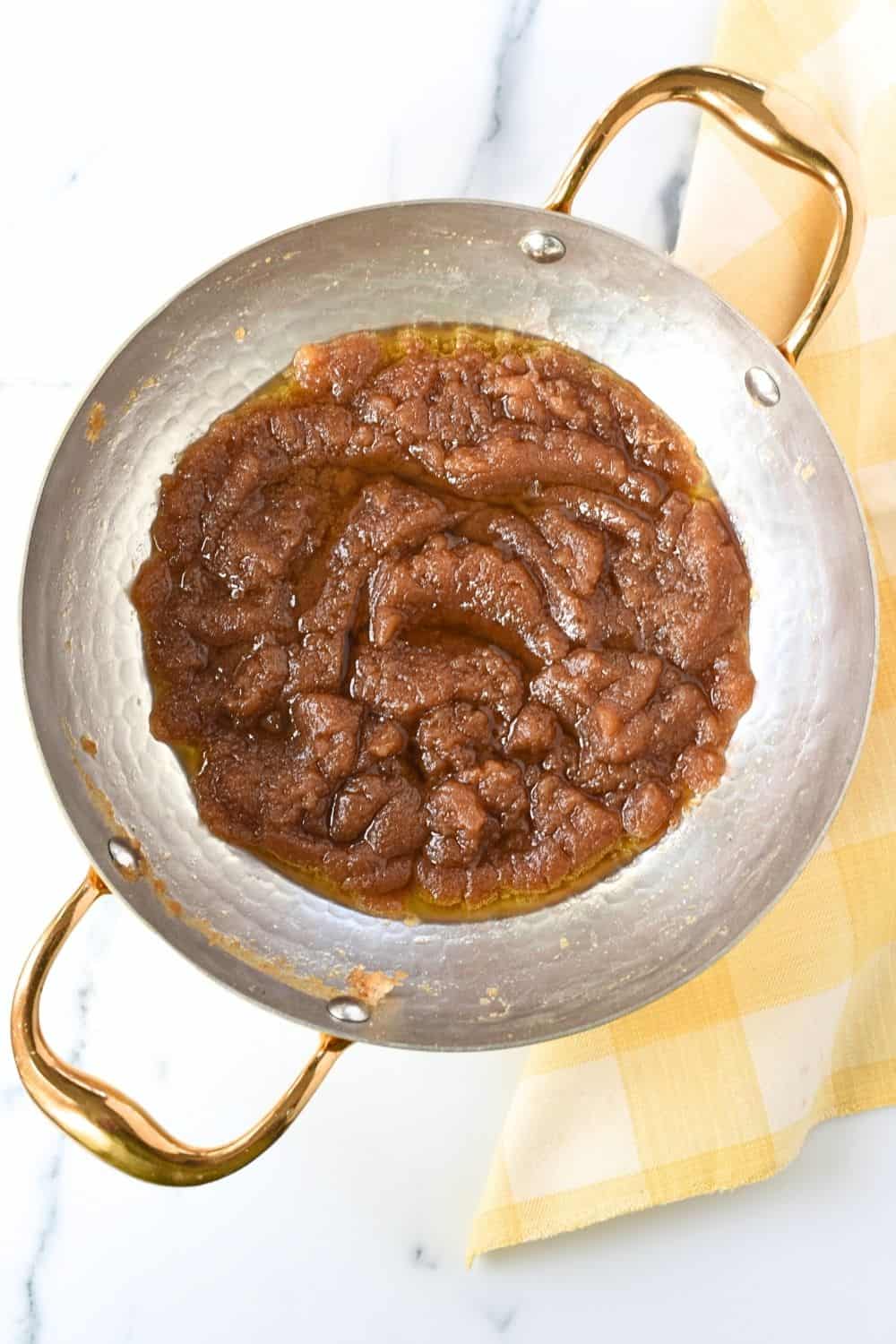
- Continue stirring on high heat. The mixture will start to thicken. You'll know it's ready when the ghee begins to separate and release from the sides of the pan. The Karah Prashad will pull away from the sides in one mass when you stir. This is the sign you've been waiting for. It means the flour is fully cooked and the texture is perfect.
- Set aside as Prasad and serve
- Remove a portion into a bowl and keep it aside as Prasad. This is the offering portion if you're making it for religious purposes. The rest can be served warm to your family. The texture should be smooth and glossy, not grainy. It's best enjoyed warm, though it stays good at room temperature for several hours.
Best Tips for Making Karah Prashad
- Karah Prashad tastes best when served warm, but it stays good at room temperature for hours.
- Use a thick-bottomed kadai or heavy pan to prevent hot spots and burning.
- Stand back slightly when adding water because it bubbles very vigorously.
- The color change from white to pale blond to light brown happens gradually and trust the process.
- If making it as Prasad, maintain cleanliness and recite Japji Sahib while cooking for spiritual significance.
Soniya's Top Tip
Never stop stirring during the roasting process. The moment you stop, the flour at the bottom starts to burn and you'll get a bitter taste that ruins the whole batch. Keep a comfortable grip on your spoon and find a steady rhythm. It makes the 15 minutes go by much faster.
How to Serve Karah Prashad
Karah Prashad is traditionally served warm in small portions. When serving as Prasad, it should be given with both hands to cupped hands of the recipient, who then touches it to their forehead as a sign of respect before eating. If serving at home for a celebration, you can portion it into small bowls. The texture should be soft enough to eat with your hands but firm enough to hold its shape. Some families serve it alongside tea for a sweet afternoon treat.
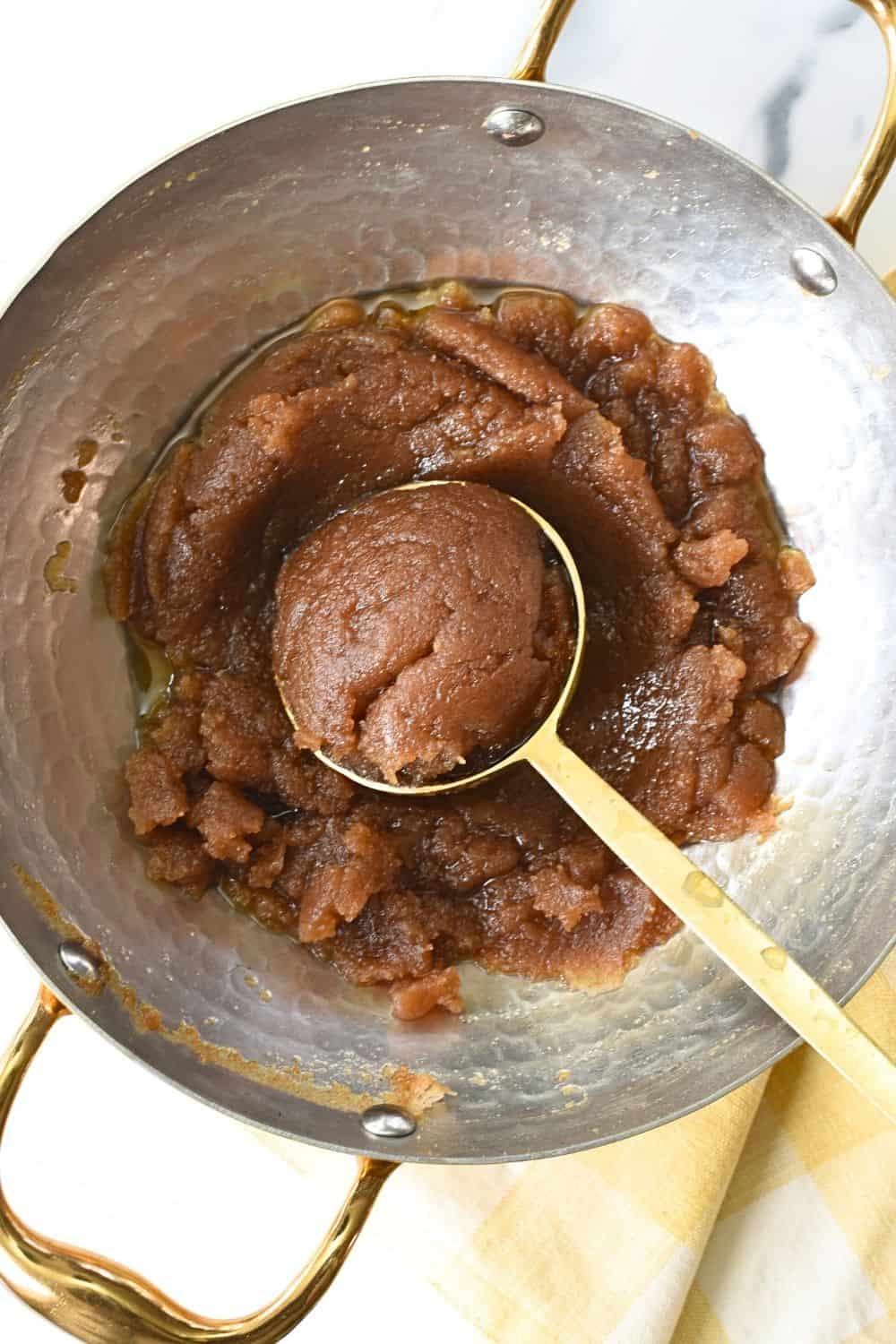
What's the Difference Between Atta Halwa and Karah Prashad?
Honestly, I get asked this all the time because they look so similar and both use wheat flour as the base. But there are some pretty important differences.
Karah Prashad is very specific. It uses exactly equal parts of whole wheat flour, ghee, and sugar, with double the amount of water. That ratio never changes. Ever. Whether you're at a Gurdwara in Punjab or Virginia or London, you'll get the exact same Karah Prashad made with the exact same proportions. It's intentional. Karah Prashad uses ONLY these four ingredients. Nothing else. No cardamom, no nuts mixed in during cooking, no saffron, no tweaks. Just wheat flour, ghee, sugar, and water.
Atta halwa, on the other hand, is more flexible. You can adjust the sweetness, add more or less ghee depending on what you prefer, throw in some cardamom for flavor, mix in nuts while it's cooking. My mom makes atta halwa at home sometimes and she'll add a pinch of cardamom or some slivered almonds. It's still delicious, but it's not the same as Karah Prashad.
The other big difference is the spiritual significance. Karah Prashad isn't just food. It's a sacred offering that's blessed during Ardaas, touched with a kirpan(holySword), and distributed as Guru's grace. There are specific protocols for making it in the Gurdwara.
So while they might look similar in the bowl, Karah Prashad carries a whole different meaning and follows a recipe that hasn't changed in centuries.
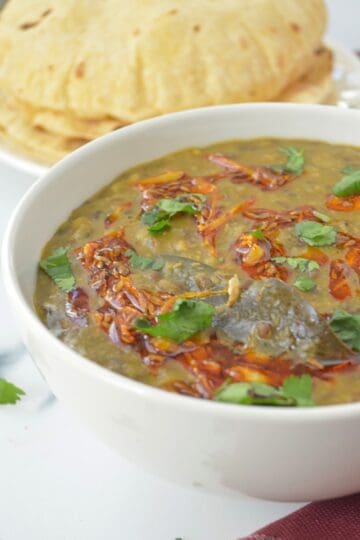
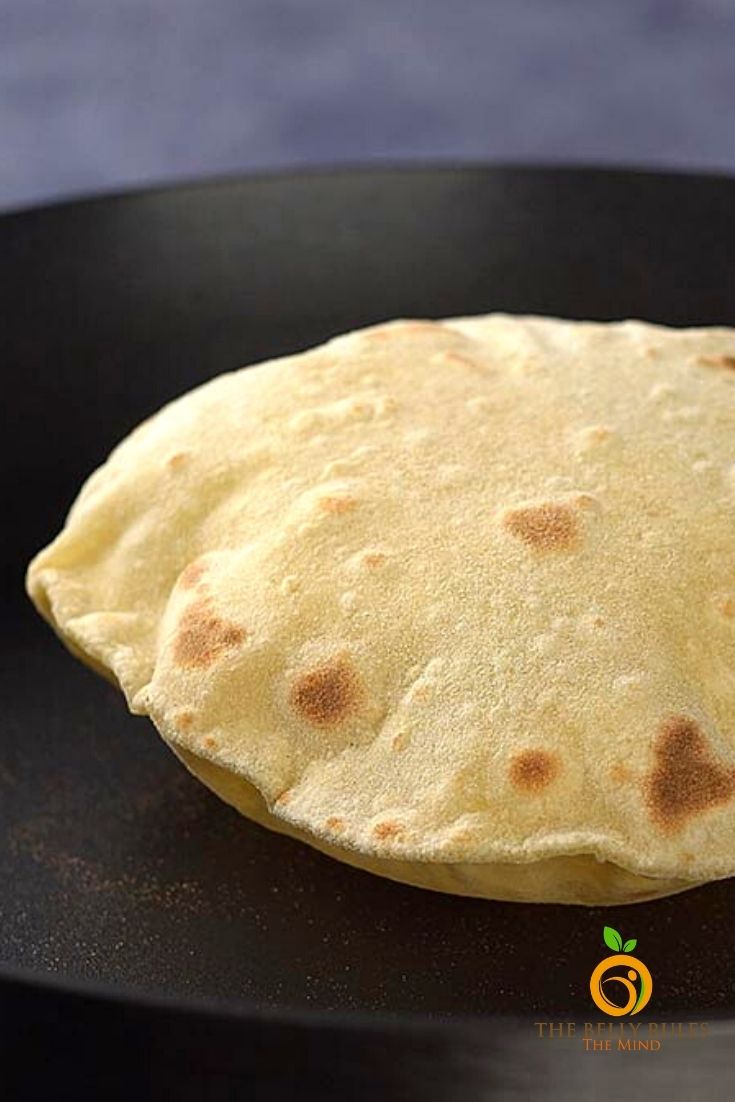
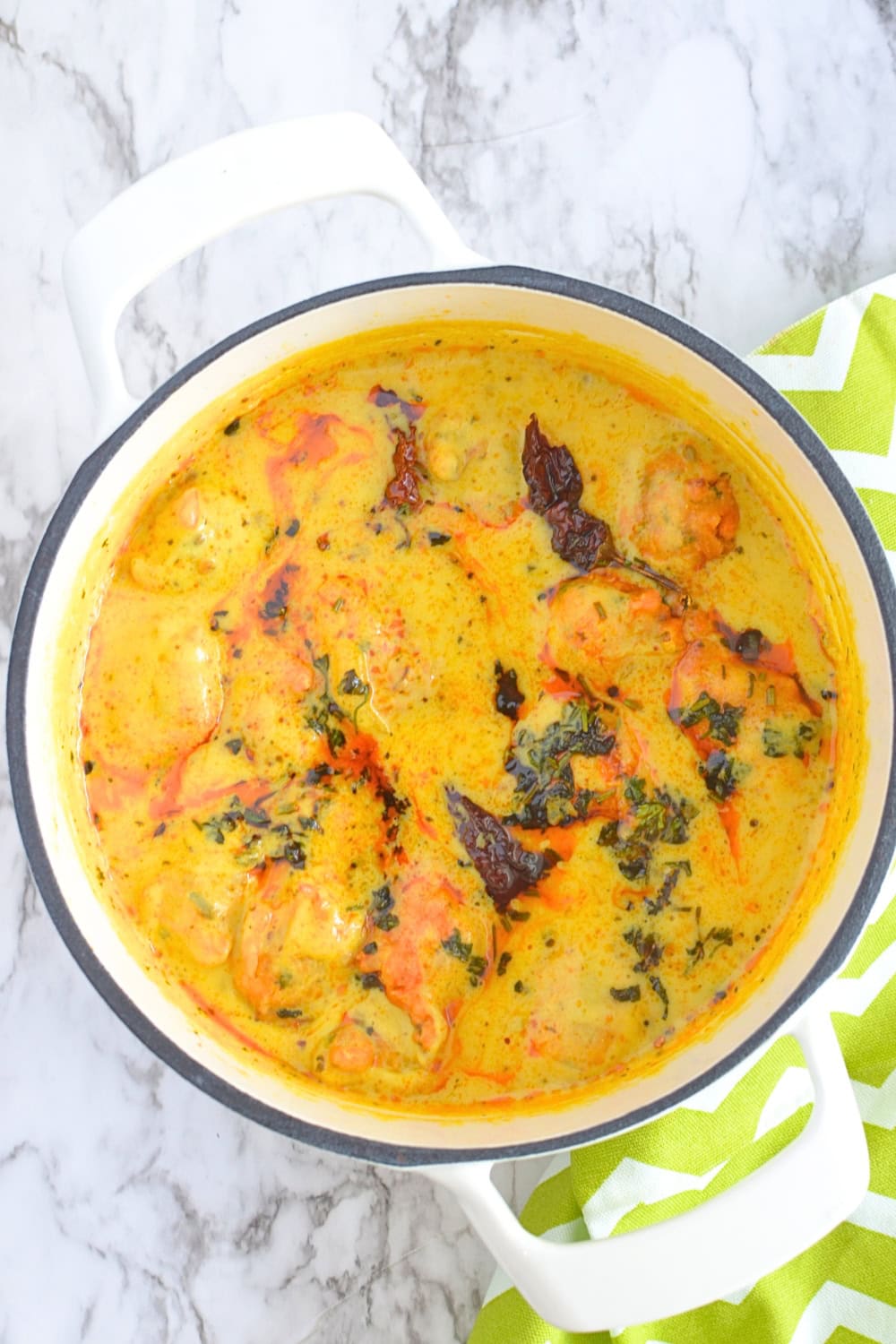
What to serve with Kada Parshad
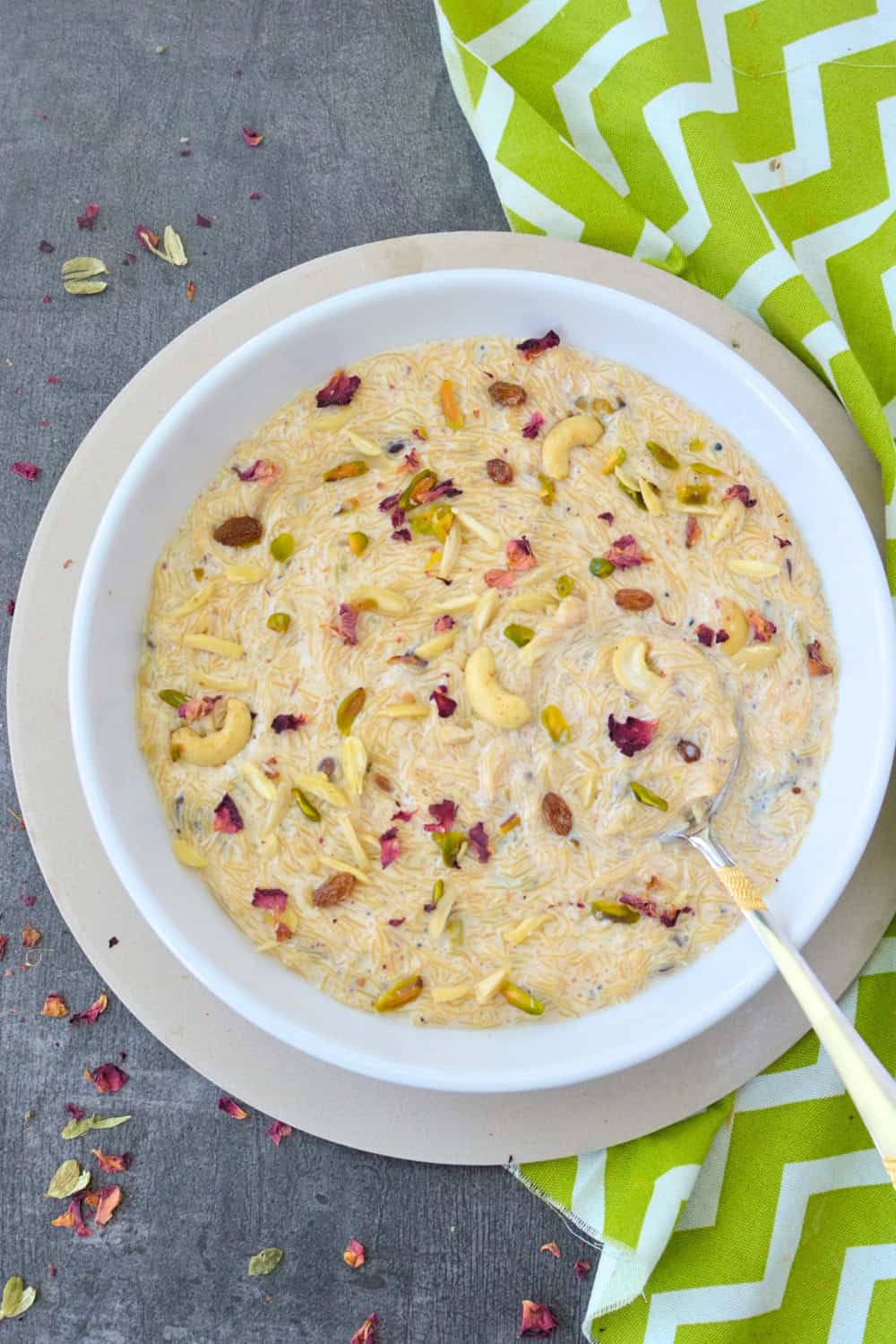
More Indian Sweet Recipes to Try
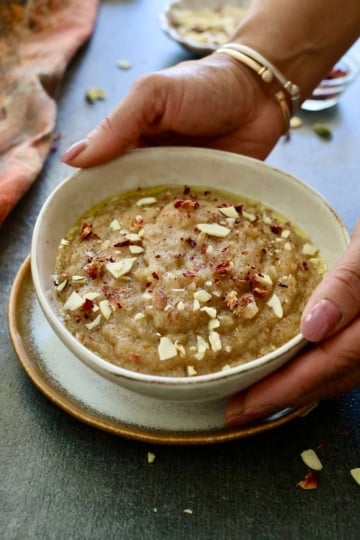
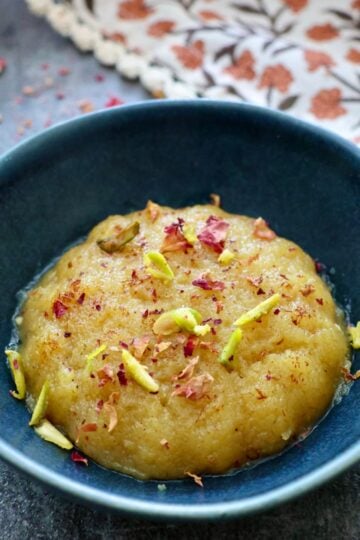
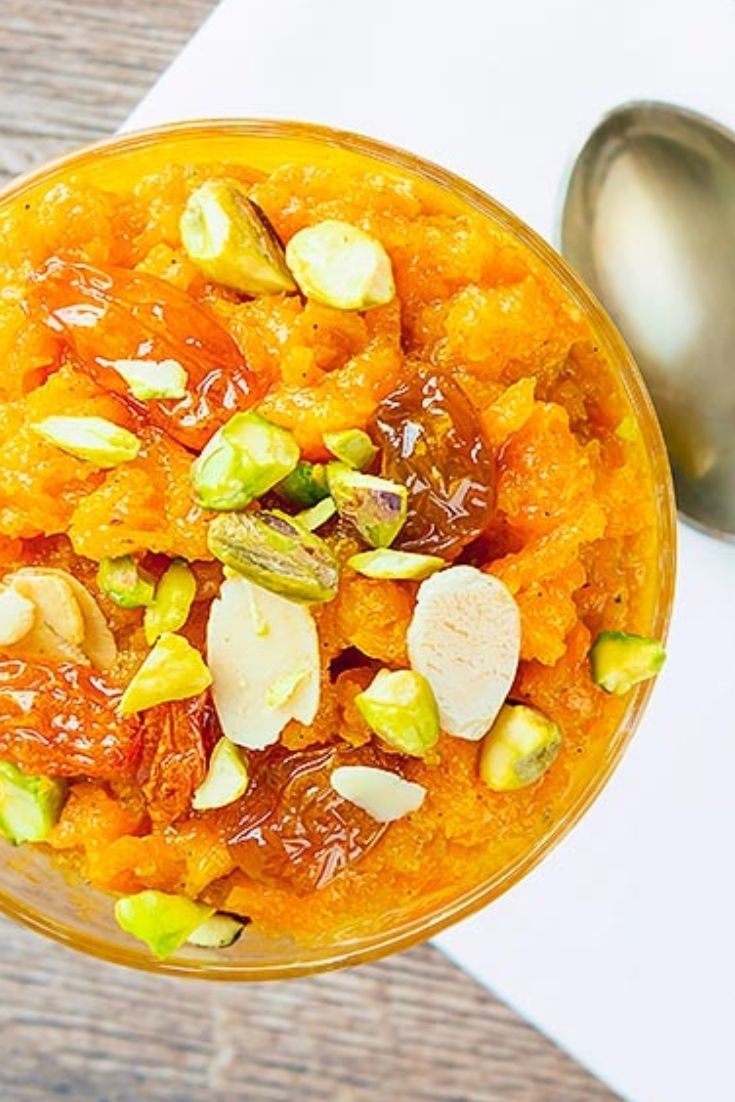
Looking for other recipes like this? Try these:
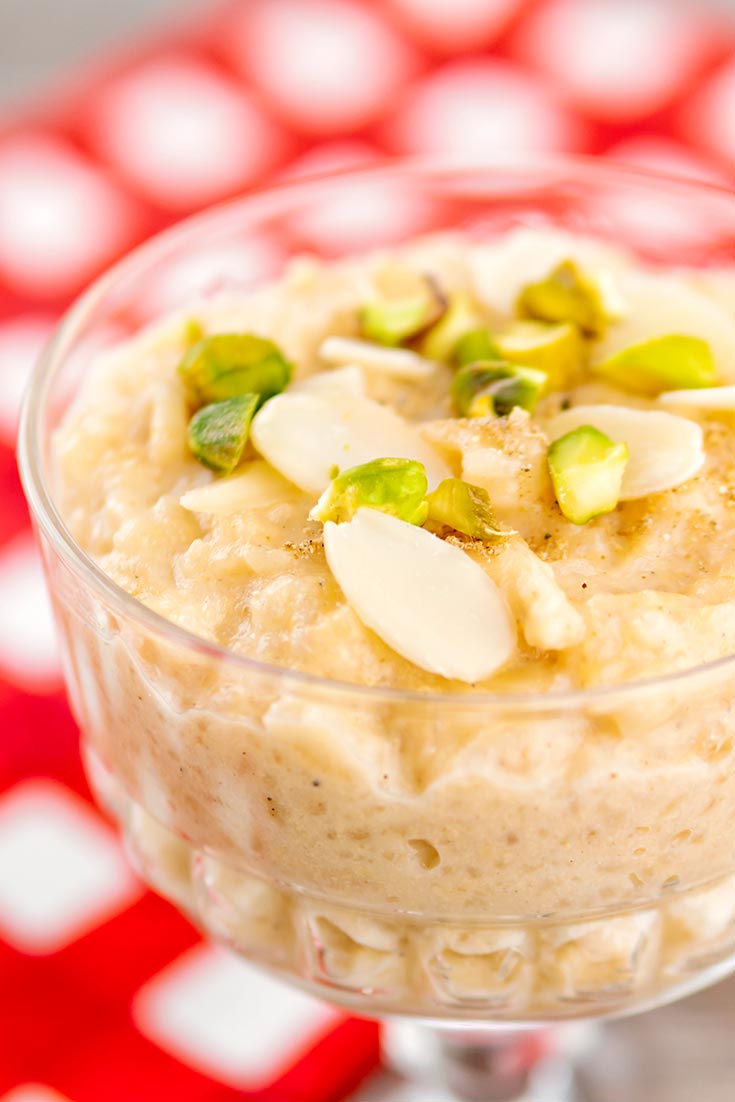
Final Thoughts
Making Karah Prashad at home connects you to centuries of Sikh tradition and the values of equality, humility, and sharing. Take your time with the roasting, and you'll create something truly special
Karah Prashad Recipe

Servings:
peopleCalories:
Ingredients
- 1 cup coarse whole wheat flour atta
- 1 cup ghee clarified butter
- 1 cup sugar
- 2 cups water
Instructions
- Melt ghee: Place thick-bottomed kadai on medium heat, add 1 cup ghee, let melt completely.
- Add flour: Add 1 cups whole wheat flour, lower heat to low-medium, stir continuously.
- Roast pale: Stir for 3-5 minutes until flour turns pale blond.
- Deepen color: Increase heat to medium-high, stir 3-5 more minutes until light brown and nutty.
- Add sugar: Add 1 cup sugar, stir well to combine.
- Add water: Slowly add 2 cups water (it will bubble), increase heat to high, stir continuously.
- Cook until done: Continue stirring until mixture thickens and ghee releases from sides.
- Serve: Remove portion for Prasad, serve rest warm.

Prita says
Thanks for sharing this divine recipe. Made it fur the first time and my whole family loved it. It's explained so well